
In the high-speed execution of modern rigid packaging lines, producing a flawless PET container relies entirely on the successful deployment of two distinctly different plastic tooling setups: the injection preform mold and the stretch blow molding cavity. While these two systems operate at different steps of the manufacturing workflow, their physics, thermodynamics, and tolerances are closely linked. Failing to understand the specific engineering requirements of each system often leads to unbalanced processing, high rejection rates, and significant revenue drops.
As a prominent Chinese engineering plant specializing in the production of high-performance blow molding machine molds and PET preform molds, Yushun Machine offers end-to-end design and manufacturing solutions. This deep structural breakdown examines the differences, technical parameters, and necessary connections between these two tooling systems to help global plants maximize their throughput and operational ROI.
1. The Injection Stage: Decoupling the PET Preform Mold
The manufacturing process begins with the PET preform mold, which operates inside high-pressure injection molding machinery. Liquid raw material is injected into the mold under extreme pressure to shape the test-tube-like "preform," which contains the finalized neck finish and the body material that will later be expanded.
- Mechanical Execution: Preform tooling features multi-cavity hot runner systems (often ranging from 16 to 72 cavities) equipped with individual valve gates. This ensures that every cavity fills at the exact same rate, preventing weight variation.
- Tolerance and Alignment: Automated bottling lines require absolute concentricity. Even a 0.1mm shift in core alignment will result in uneven wall thickness. Yushun Machine prevents this by integrated independent self-locking tapers for every single cavity block, ensuring the neck finish and body geometry remain perfectly concentric across millions of high-speed cycles.
2. The Blowing Stage: Decoding the Blow Molding Machine Mold
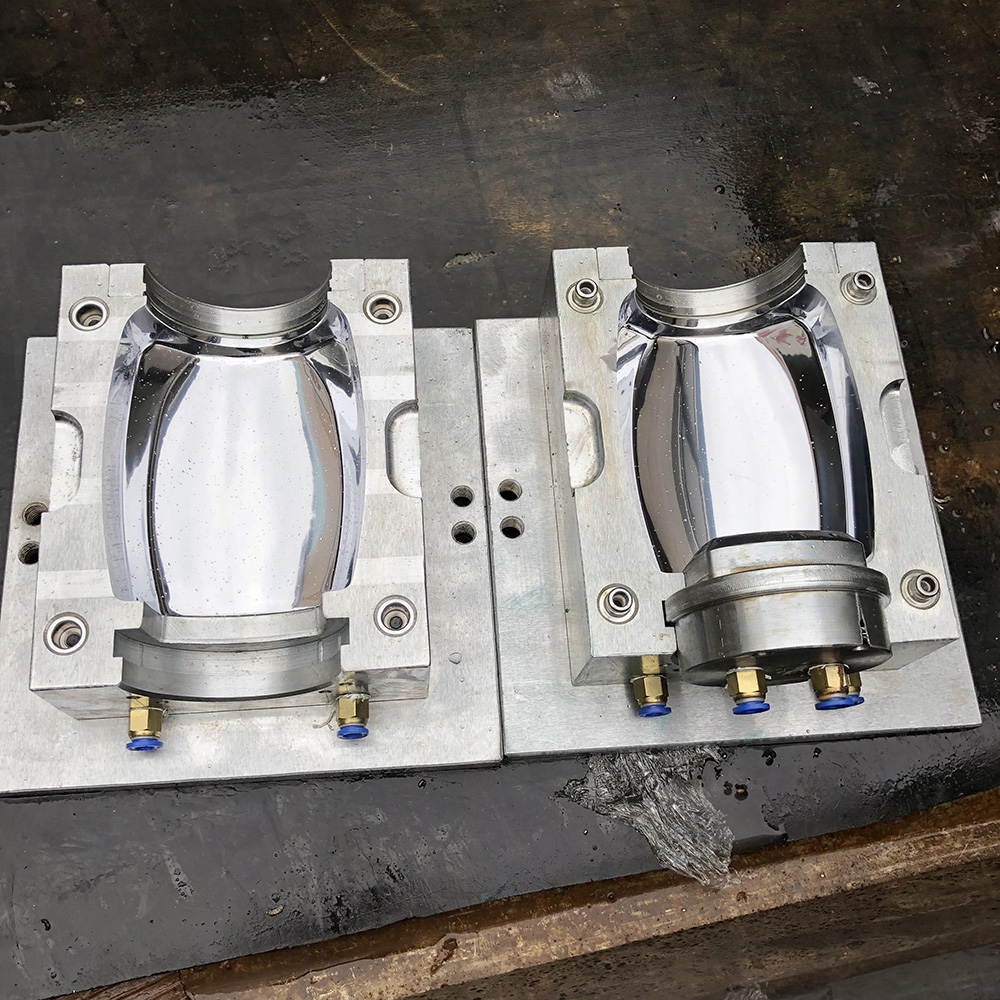
Once the solid preform is generated, it undergoes a separate reheating and expansion process within the bottle blowing machine molds. Here, the preform body is stretched mechanically via a stretch rod and inflated using high-pressure compressed air (up to 40 bar) to take the shape of the final container cavity.
Thermodynamic Constraint: The primary goal of the blowing mold is to cool the hot, stretched plastic rapidly so that the container can hold its precise structural shape and clarity upon ejection.
To support fast production targets, Yushun Machine's premium blowing cavities are machined from top-tier forged aluminum or imported steels (like S136 and 718H). We integrate complex conformal cooling pathways that follow the exact contour of the bottle shape. By routing high-velocity chilled water directly behind the bottle walls and base cup, we reduce cooling times significantly, allowing automatic blow molding systems to achieve quick cycle times under 4 seconds.
Technical Matrix: Tooling System Comparison
The table below provides a clear breakdown of the engineering, operating environment, and design limits of these two critical tooling components:
| Engineering Property | PET Preform Mold (Injection Phase) | Blow Molding Machine Mold (Blowing Phase) |
|---|---|---|
| Primary Process Type | High-pressure plastic injection molding | Stretch blow molding (SBM) via compressed air |
| Internal Pressure Load | Extreme injection pressure (> 800 bar) | High pneumatic pressure (30 - 40 bar) |
| Tooling Base Materials | Hardened stainless tool steels (S136, 2316) | High-grade forged steel or aircraft aluminum |
| Key Component Influence | Defines neck finish precision, thread structure, and total weight | Defines final container shape, surface clarity, and base stability |
| Cooling System Style | Core/cavity cooling loops via hot runner plates | High-velocity conformal cooling loops and base venting |
| Typical Tool Lifespan | Exceeds 10 - 12 million cycles | Exceeds 5 - 8 million cycles |
3. The System Interconnectivity: Designing for Harmony
A blow mold cannot correct defects inherited from a poorly manufactured preform. If the preform lacks uniform wall thickness or features incorrect material distribution, the stretch blow molding process will yield structurally weak bottles with thin panels or bad base formation. Achieving optimal packaging results requires both systems to be engineered together by a single professional source.
Yushun Machine acts as your integrated solution expert, simulating the relationship between preform thickness, stretch ratios, and final container blow profiles. This comprehensive engineering approach ensures that the preforms generated by our injection tooling perform flawlessly inside our high-speed blowing cavities, maximizing your automation efficiency and reducing material scrap rates to under 0.2%.
Yushun Machine: Your Professional Packaging Turnkey Expert
Optimizing an international bottling facility requires deep engineering insight across material physics, custom mold manufacturing, and automated line dynamics. Yushun Machine offers advanced technical solutions from China, designing and building tightly integrated combinations of PET preform molds and blow molding machine molds tailored to high-speed automatic lines. From initial container design and rapid prototyping to stress testing and on-site integration, our team ensures your manufacturing line delivers reliable, long-term returns.
Eliminate the risks of mismatched tooling architectures. Contact Yushun Machine today to implement high-precision mold systems that boost production efficiency and lower your manufacturing overhead.