
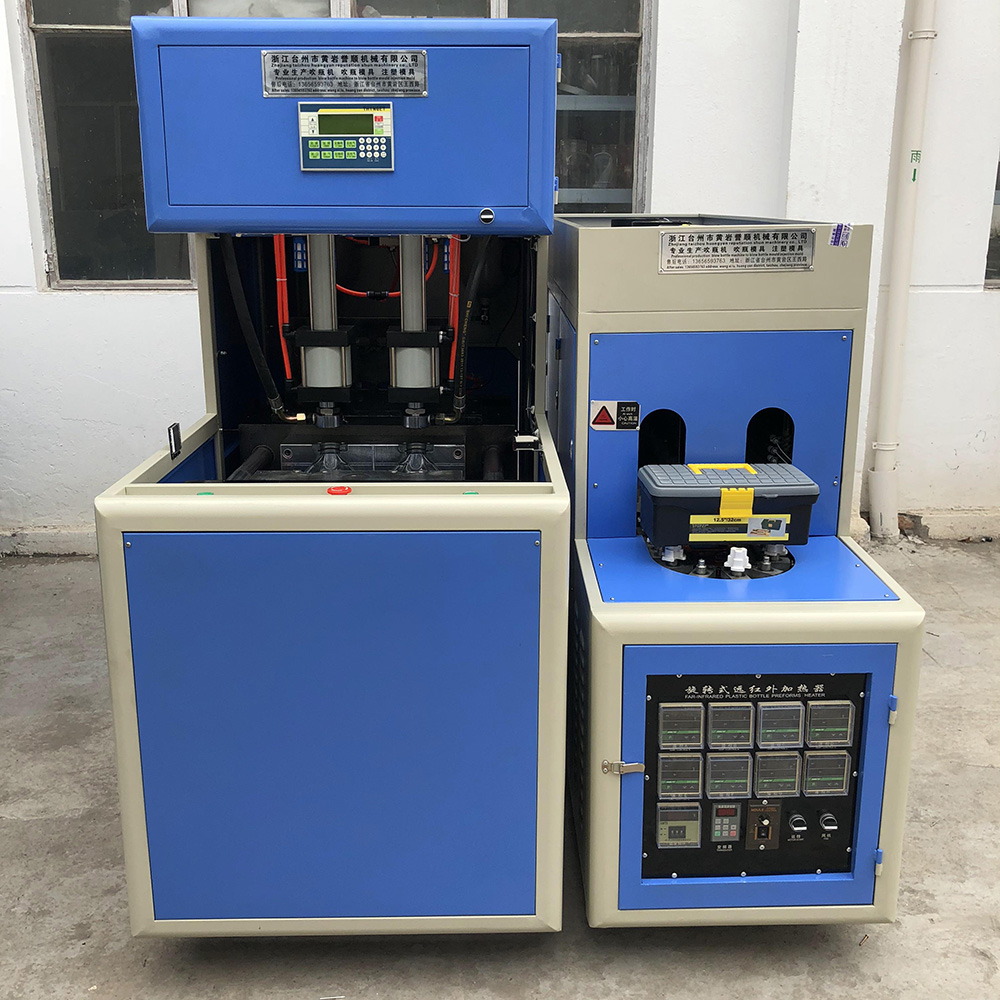
How to Match Your Blow Molding Machine with the Right Preform Mold for Maximum Output
Published by: YuShun Machine Technical Engineering Team
Target Industry: PET Packaging, Beverage Bottling, Household Chemical & Cosmetic Manufacturing
Introduction: The Costly Gap Between Machine Capacity and Mold Design
In high-speed PET bottle manufacturing, operational efficiency depends heavily on the synchronized interaction between the stretch blow molding (SBM) machine and the preform mold. Beverage producers, packaging converters, and contract manufacturers often experience unexplained output bottlenecks, high scrap rates, or premature component wear. In many cases, these issues do not stem from machine failure, but from a fundamental mismatch between the blow molding machinery and the preform mold parameters.
At YuShun Machine, as a specialized manufacturer of high-precision blow molding machines and custom preform molds, we have observed how aligning technical specifications across clamp tonnage, stretch stroke speed, thermal profiles, and pitch spacing can unlock untapped production potential. This comprehensive technical guide breaks down the precise engineering factors required to pair your machinery with the optimal preform mold for maximum throughput, superior bottle quality, and reduced cycle times.
1. Clamping Force vs. Cavity Pressure Dynamics
One of the most frequent causes of flash formation and mechanical strain is an imbalance between the machine’s clamping force and the total cavity pressure generated during the high-pressure blowing phase (typically 30 to 40 bar for PET containers).
Calculating Required Clamping Force
To prevent mold separation during high-pressure blowing, the machine's clamping force must exceed the projected area force exerted by all cavities combined:
Required Clamping Force (kN) = Total Projected Area of Cavities (cm²) × Peak Blowing Pressure (bar) × Safety Factor (1.15 - 1.25)
- Under-clamping: Results in parting line flash, dimensional inaccuracy, uneven wall thickness, and excessive wear on the mold parting surfaces.
- Over-clamping: Causes structural fatigue on machine tie-bars, damages mold vent channels, and consumes unnecessary hydraulic or servo energy.
YuShun Engineering Tip: When upgrading to multi-cavity preform molds, always evaluate the effective projected area rather than relying solely on cavity count. Our custom mold bases incorporate reinforced core-locking mechanisms to distribute clamping force evenly across every cavity layout.
2. Pitch Spacing and Platen Kinematics Compatibility
Maximizing output often leads plants to increase cavity density. However, increasing cavity counts within an existing platen area requires careful alignment with machine kinematics, perform handling, and pitch dimensions.
| Machine Parameter | Preform Mold Alignment Factor | Impact on Output & Quality |
|---|---|---|
| Platen Tie-Bar Clearance | Mold Base Width & Height | |
| Ejection Stroke & Force | Neck Finish & Core Ejection Travel | |
| Pitch Distance (mm) | Transfer Arm Spacing |
3. Thermal Balance and Coolant Flow Optimization
Cycle time in PET preform and bottle production is primarily governed by cooling efficiency. A high-performance mold installed on a machine with inadequate chilling capacity will inevitably result in extended cycle times or heat-induced bottle deformation.
Key Thermal Matching Criteria:
- Cooling Channel Geometry: High-efficiency preform molds utilize conformal cooling passages around the neck finish, gate area, and core body to achieve uniform thermal dissipation.
- Flow Velocity & Turbulence: To maximize heat transfer, coolant flow through the mold must maintain a high Reynolds Number (Re > 4,000), indicating turbulent flow.
- Chiller Capacity Matching: The machine's auxiliary water chiller must handle the specific heat load (kW) generated at peak production rates.
YuShun Machine designs preform molds featuring copper alloy inserts (such as Beryllium Copper or Ampcoloy) in high-thermal-stress zones like the gate area, accelerating cooling cycles by up to 15-20% compared to standard tool steel configurations.
4. Stretch Rod Stroke Speed and Pneumatic Flow Rates
Achieving optimal material distribution in stretch blow molding requires precise coordination between mechanical stretch rod velocity and high-pressure air delivery. The preform design must match the pneumatic flow characteristics of the blow molding machine.
- Preform Weight and Stretch Ratio: The preform's axial stretch ratio ($L_{bottle} / L_{preform}$) and hoop stretch ratio ($D_{bottle} / D_{preform}$) must align with the machine's mechanical stretch rod speed.
- Valving Response Time: High-output rotary and linear blow molding machines require fast-acting solenoid valves to initiate pre-blow and main blow air within milliseconds of stretch rod initiation.
- Gate Center Alignment: Precision-centered gate alignment on the preform mold prevents off-center bases, ensuring even stress distribution during high-speed inflation.
5. Neck Finish Standardization and Lightweighting Strategy
Material cost accounts for up to 70% of total bottle manufacturing expenditure. Transitioning to lightweight neck finishes (e.g., PCO 1881, 29/25, or tethered cap standards) demands total compatibility between the preform mold's neck split inserts and the machine’s transfer grippers.
How YuShun Supports Lightweighting Integration:
- Custom Neck Ring Inserts: Interchangeable neck designs allow quick mold conversion without replacing the entire mold base.
- Thread Profile Integrity: Precision CNC thread grinding prevents thread flash, ensuring leak-tight seal performance on light-weight closures.
- Smooth Transfer Handling: Tailored preform neck geometries designed to match automatic machine loading mechanisms, eliminating scuffing and dropped preforms.
Conclusion: Partnering with YuShun Machine for Complete System Optimization
Matching your blow molding machine with the correct preform mold is not merely a purchase decision—it is a comprehensive engineering calculation. When machine mechanics, mold thermal design, and preform geometries work in complete harmony, manufacturing plants achieve maximum output, lower energy consumption per unit, and minimal downtime.
As a leading Chinese manufacturer specializing in both custom preform molds and advanced stretch blow molding machinery, YuShun Machine offers end-to-end technical evaluation. Whether you are expanding production capacity, implementing lightweight packaging solutions, or optimizing existing production lines, our engineering team provides tailored turn-key solutions tailored to your operational needs.