
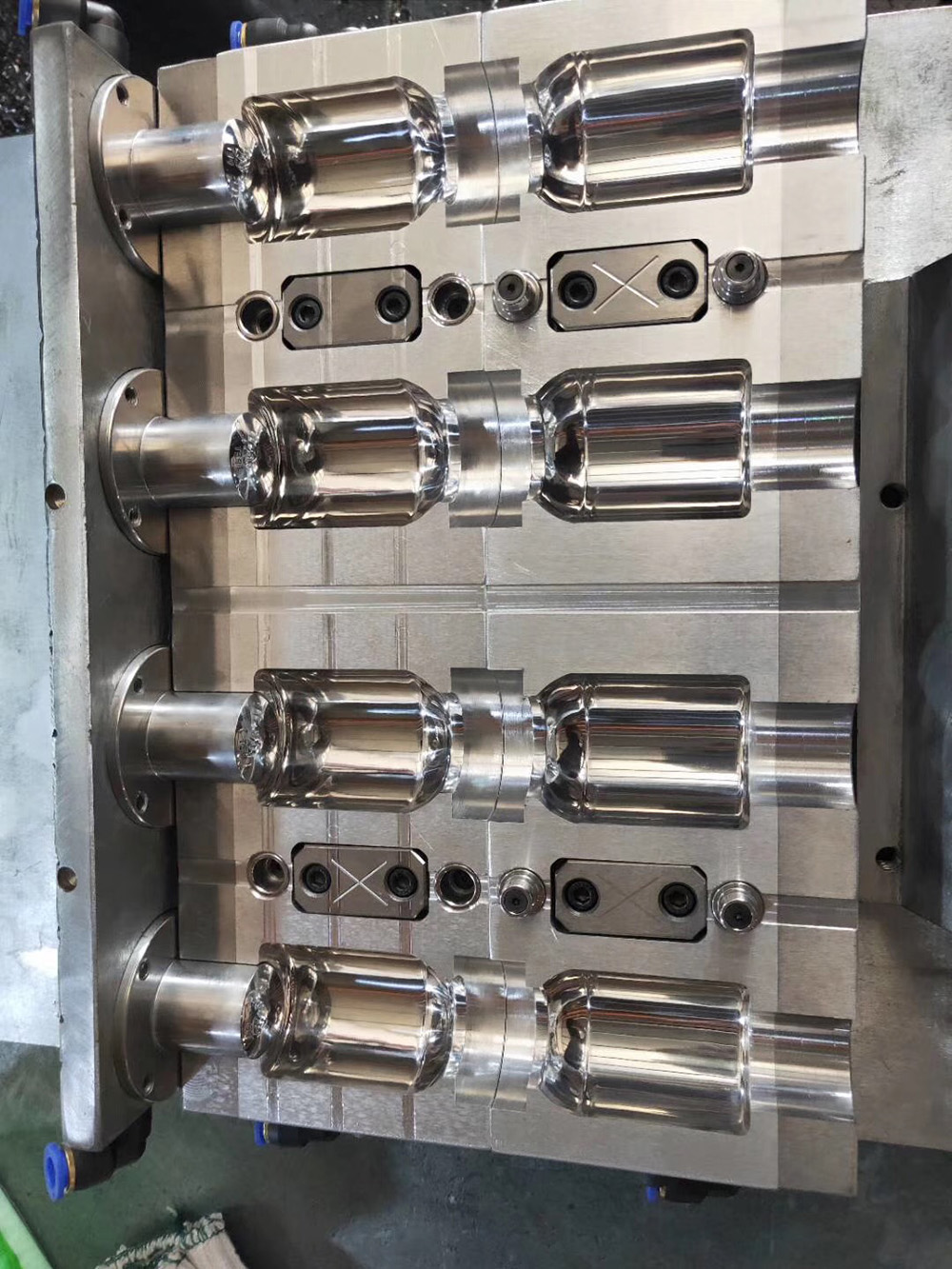
In high-speed multi-cavity stretch blow molding (SBM) operations, unplanned maintenance represents a major threat to Overall Equipment Effectiveness (OEE). Traditional monolithic valve block architectures require full system depressurization, complex piping teardowns, and hours of labor just to replace a single worn seal or sticky solenoid valve. As cavitation scales up to 16, 24, or 48 cavities, maintenance bottlenecks compound rapidly, leading to significant production losses.
As a leading Chinese engineering enterprise specializing in high-precision PET preform molds and high-performance blow molding machine molds, Yushun Machine delivers an in-depth technical white paper. This analysis explores how transitioning to modular valve group designs significantly reduces mean time to repair (MTTR), minimizes compressed air losses, and ensures maximum uptime for global packaging facilities.
1. The Maintenance Bottleneck of Monolithic Valve Blocks
In legacy blow molding setups, pneumatic valve blocks are often engineered as single, integrated manifold castings housing multiple pre-blow (P1), high-pressure (P2), and exhaust channels for multiple cavities:
- Extended Mean Time to Repair (MTTR): When an internal high-pressure seal fails or a poppet valve sticks on cavity #12 of a monolithic block, technicians must shut down the entire blowing line, disconnect main air headers, and drain system pressure before servicing.
- Risk of Collateral Damage: Tight spatial clearances inside integrated manifolds increase the risk of damaging neighboring pneumatic fittings or signal wiring during tight manual disassembly.
- High Total Maintenance Labor Costs: Routine valve overhauls require specialized technicians for extended shifts, directly eroding plant profit margins and lowering annual output capacity.
2. Engineering Principles of Modular Valve Architecture
Modular valve design replaces monolithic blocks with independent, plug-and-play cartridge valve assemblies mounted onto a shared distribution bus. Each individual cavity or paired cavity group operates via isolated, self-contained pneumatic modules.
Modular Design Principle: Quick-release pneumatic couplers and integrated check valves allow individual valve cartridges to be isolated, removed, and swapped in under 10 minutes without depressing the main high-pressure factory air ring main.
A. Hot-Swappable Cartridge Mechanics
Modular valve blocks feature quick-lock retaining pins and self-sealing check valves at the manifold interface. When a module is unclipped for service, internal check valves instantly snap shut, preventing air loss from the primary 40 bar pressure header.
B. Decentralized Solenoid Control and Precision Timing
By housing individual pilot solenoids directly adjacent to each valve cartridge, modular systems eliminate long pneumatic signal tubing runs. This reduces signal latency to under 2 milliseconds, ensuring identical pre-blow and high-pressure opening times across all cavities.
3. Synergistic Integration: Modular Pneumatics and Precision Tooling
While modular valve blocks minimize pneumatic maintenance downtime, achieving ultimate plant OEE requires absolute mechanical stability at the mold tooling level. Inconsistent mold cooling or flexing parting lines will cause bottle wall thickness defects regardless of valve speed.
Yushun Machine engineers custom PET blowing molds and blow molding machine molds designed to complement advanced modular pneumatic systems:
- Precision Micro-Vented Parting Lines: CNC-machined exhaust venting channels allow rapid air evacuation during high-pressure expansion, reducing back-pressure stress on exhaust valves and extending seal life.
- 3D Conformal Cooling Circuits: Balanced internal water channels stabilize base temperatures, enabling rapid cycle times and preventing thermal accumulation around heavy container bases.
- Quad-Stage Multi-Taper Locks: High-tensile mold construction prevents parting line micro-flexing under 40 bar blowing pressure, protecting mold alignment and reducing mechanical wear.
Comparative Performance Analysis: Monolithic vs. Modular Valve Systems
The matrix below highlights the operational differences between legacy monolithic valve blocks and modern modular valve architectures integrated with Yushun Machine tooling:
| Operational Parameter | Legacy Monolithic Valve Block | Yushun Machine Modular Valve Integration | Plant Maintenance Benefit |
|---|---|---|---|
| Valve Maintenance / Swap Time | 120 – 180 Minutes (Full system teardown) | ≤ 12 Minutes (Plug-and-play cartridge) | 90% reduction in maintenance downtime |
| Main Air Ring Depressurization | Required (Full line shut down) | Not Required (Self-sealing check valves) | Zero energy waste and faster servicing |
| Cavity-to-Cavity Timing Variance | Variable due to long pilot tubing | Uniform (< 2 ms latency via direct mount) | Eliminates wall thickness eccentricity |
| Overall Equipment Effectiveness (OEE) | Impacted by frequent unscheduled stops | Maximized (> 98.5% continuous uptime) | Significantly higher annual bottle output |
Yushun Machine: Specialized Blow Molding Tooling Experts
Maximizing profitability in rigid packaging manufacturing requires combining reliable modular pneumatic systems with world-class mold engineering. Sub-standard mold materials, poor thermal balance, or rigid valve setups will lead to frequent maintenance interventions and lost production capacity.
Yushun Machine delivers turnkey packaging tooling solutions from China, manufacturing custom PET preform molds, PET blowing molds, and bottle blowing machine molds. Constructed from premium materials with advanced conformal cooling and precision mechanical locks, Yushun Machine equips global beverage producers with the stability needed to maximize line efficiency and lower unit production costs.
Optimize your plant's pneumatic maintenance workflow and elevate blow molding performance. Contact Yushun Machine today for specialized technical audits and custom mold proposals.