
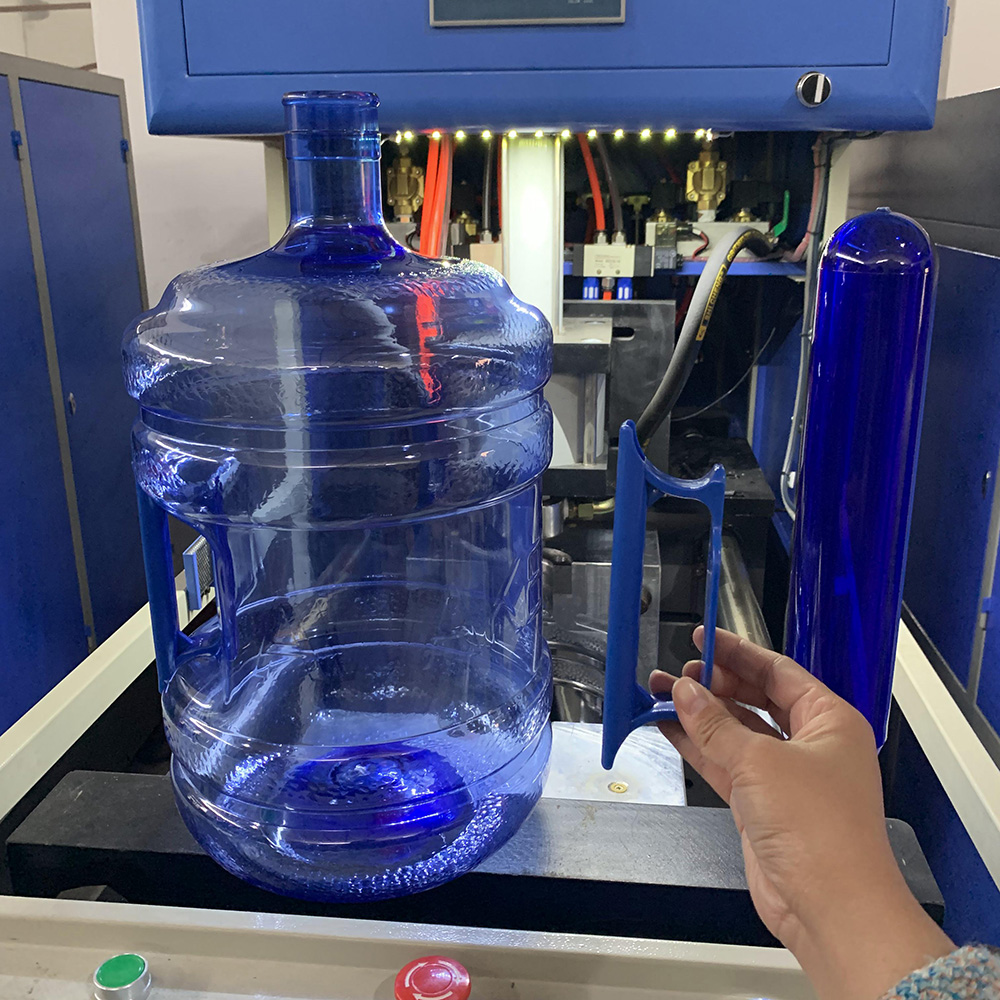
YUSHUN MACHINE manufactures PET blow molding machines and blow molds as an integrated product line. This position matters more in 2026 than it did five years ago, because the trends reshaping blow molding machines directly affect what the mold must deliver. A machine with AI-driven quality control needs a mold that produces consistent preforms. An all-electric machine with servo precision needs a mold whose cooling and venting support shorter, more repeatable cycles. A smart factory connection needs a mold that generates data the system can act on.
This analysis examines each trend at the machine-mold interface, not as a standalone machine feature.
Trend 1: All-Electric Systems and the Precision Dividend
The shift away from hydraulics is no longer a premium option. It is the default architecture for new machine platforms. At K 2025, Uniloy, Kautex, Automa by Magic, Bekum, and Tahara all introduced or expanded all-electric lines [citation:1]. The stated benefits are consistent across manufacturers: lower energy consumption, quieter operation, and more precise motion control.
The energy numbers are substantial. Uniloy’s UIB 129.E injection blow molder requires just 18 kilowatts under normal operation—up to 60% less than comparable hydraulic systems [citation:1]. CHUMPOWER’s L Series all-electric linear machines claim 30–35% energy savings versus traditional linear machines, achieved through servo drive efficiency and air recovery systems [citation:5].
What All-Electric Motion Control Means for the Mold
Servo-driven clamping and stretching are not simply “smoother.” They are repeatable in ways that hydraulic systems cannot match. A servo clamp returns to the same position within microns on every cycle. A servo stretch rod follows the same velocity profile shot after shot.
This precision changes the mold specification. A mold designed for a hydraulic machine can tolerate small variations in clamp position and stretch timing because the machine itself introduces variability. On an all-electric machine, the machine’s contribution to variation approaches zero—and the mold’s contribution becomes the dominant variable.
| Machine Architecture | Clamp Repeatability | Stretch Profile Control | Implication for Mold Specification |
|---|---|---|---|
| Hydraulic | ±0.05–0.10 mm typical | Speed profile limited by valve response | Mold must accommodate machine variation; wider tolerances acceptable |
| All-electric servo | ±0.01 mm or better | Programmable velocity profile with high repeatability | Mold becomes the dominant source of variation; tighter mold tolerances deliver measurable yield improvement |
For YUSHUN MACHINE’s blow mold customers, this means that a mold specified for a hydraulic machine may not deliver its full potential on an all-electric platform. The mold’s parting line alignment, cavity concentricity, and cooling uniformity must be held to tighter tolerances because the machine is no longer masking those variations.
Trend 2: AI Quality Control and the Closed-Loop Mold
The second trend is the shift from inspection to active process control. Traditional blow molding quality systems measure bottles after they are made and reject the bad ones. AI-driven systems measure the process and adjust it in real time to prevent bad bottles from being made.
Agr’s Process Pilot+ represents the current state of this technology. As the Pilot Profiler system continuously measures material distribution on every bottle, Process Pilot+ works with the blow molder to proactively manage optimal material distribution. Agr states explicitly that the system can manage the blow molder to maintain quality and performance attributes despite “material variations due to rPET that occur during the production process” [citation:2][citation:6].
The system’s AI enhancements enable operators to automatically optimize the blow molder based on performance, energy efficiency, or operating costs [citation:2]. This is not a passive monitoring system. It is a closed-loop controller that treats the blow molding process as a variable to be managed, not a fixed recipe to be followed.
The Mold’s Role in an AI-Controlled Process
An AI quality control system depends on measurable, repeatable inputs. If the mold produces preforms with inconsistent wall thickness distribution, the system will attempt to compensate—but it will be compensating for a mold problem, not a process problem. The result is a control loop that is always chasing the mold’s variability rather than optimizing the process.
For mold specification, this means three things:
- Cavity-to-cavity consistency becomes a control system requirement: If one cavity produces preforms that blow differently from the others, the AI system cannot distinguish cavity variation from process drift. The mold must deliver uniform preforms before the AI system can deliver its promised optimization.
- Cooling uniformity affects the control loop’s stability: A mold with uneven cooling produces bottles with varying thermal history. The AI system adjusts blow parameters to compensate, but the adjustment is chasing a thermal problem that originates upstream.
- Venting and surface finish affect measurement accuracy: AI vision systems inspect the blown bottle. A mold that produces surface defects—flow lines, burn marks, or uneven gloss—confuses the vision system’s defect detection. The mold must produce bottles that the AI can accurately evaluate.
Trend 3: Smart Factories and the Data-Ready Mold
The third trend is the integration of blow molding into plant-level data systems. Smart factory connectivity has moved beyond OEE dashboards. CHUMPOWER’s L Series, for example, is compatible with a BottleViewer management system that provides real-time monitoring of production, energy use, and OEE analytics, with a multi-user dashboard for data-driven decision-making [citation:5].
This connectivity creates a new requirement for the mold: it must be identifiable within the data system. A smart factory knows which mold is running, what its maintenance history is, and how its performance compares to previous runs. A mold that arrives without documentation—without a serial number traceable to its steel certificates, without a maintenance schedule, without a baseline performance record—is a blind spot in an otherwise connected plant.
What Smart Factory Integration Requires from Mold Documentation
| Data Requirement | What the Mold Maker Must Provide | Why the Smart Factory Needs It |
|---|---|---|
| Mold identification | Unique serial number, cavity count, and configuration record | Links production data to the specific tool; enables performance comparison across molds |
| Design baseline | Cooling circuit flow rates, gate geometry, and specified cycle time | Establishes the reference for detecting drift in the data system |
| Maintenance history | Wear component replacement intervals and inspection records | Predictive maintenance algorithms need historical data to model component life |
| Performance baseline | Trial run data: wall thickness distribution, bottle quality results | Allows the smart factory to distinguish mold degradation from process variation |
For YUSHUN MACHINE, this trend reinforces the value of supplying machine and mold as an integrated system. When the mold’s data is captured at the source—by the same company that understands the machine’s control architecture—the smart factory integration is coherent. When the mold comes from one supplier and the machine from another, the data interface becomes a negotiation rather than an engineering specification.
What These Trends Mean for Mold Buyers
The common thread across all three trends is that the mold’s contribution to variation matters more, not less, as machines become more capable. An all-electric machine with servo precision, an AI control system with real-time optimization, and a smart factory with plant-wide analytics all depend on a mold that delivers consistent, documented, repeatable output.
A mold specified for a 2015 hydraulic machine is not the same mold that should be specified for a 2026 all-electric machine with AI control. The differences are not marketing features. They are engineering requirements that flow from the machine’s capabilities.
YUSHUN MACHINE’s position is that the mold and machine specification should be developed together—not because it benefits us commercially, but because the trends described in this article make the machine-mold interface more interdependent, not less.
Frequently Asked Questions
Can an existing blow mold be used on an all-electric blow molding machine?
Mechanically, yes—if the mold’s mounting pattern and dimensions match the machine’s platen and clamping system. Operationally, the mold may not deliver the full benefit of the all-electric machine’s precision. A mold with loose tolerances on parting line alignment or cavity concentricity will produce more variation than the machine is capable of introducing. For high-value applications, the mold should be evaluated against tighter tolerances before being paired with an all-electric platform.
Does AI quality control require a special mold?
No, but it requires a mold that produces consistent output. Agr’s Process Pilot+ compensates for process and material variation, but it cannot correct for a mold that produces cavity-to-cavity wall thickness spread beyond the blow molding process’s ability to compensate. The practical threshold is a mold that delivers preforms within the wall thickness specification the AI system is designed to manage.
What documentation should I request from a mold maker for smart factory integration?
At minimum: unique mold serial number, cavity count and configuration record, cooling circuit flow rates and pressure drops at operating conditions, trial run wall thickness data, and a wear component list with recommended inspection intervals. This data allows the smart factory system to establish a baseline and detect drift before it affects quality.
Does YUSHUN MACHINE supply blow molds specifically for all-electric machines?
YUSHUN MACHINE manufactures both PET blow molding machines and blow molds, and specifies the mold tolerances based on the machine platform the customer is using. For all-electric machines, the mold specification includes tighter cavity concentricity and parting line tolerances to match the machine’s precision. For project-specific consultation on machine-mold matching, contact the YUSHUN MACHINE technical team.