
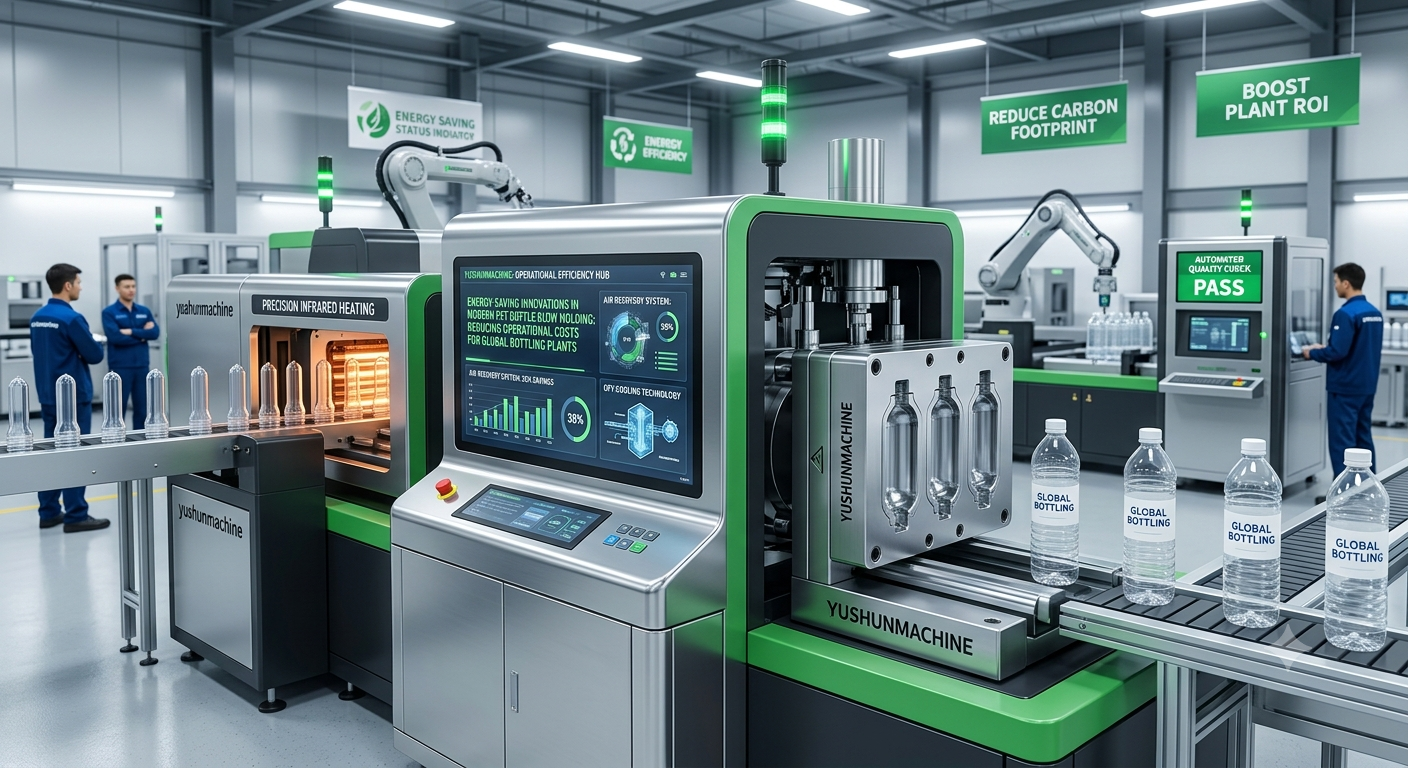
Energy-Saving Innovations in Modern PET Bottle Blow Molding:
Reducing Operational Costs for Global Bottling Plants
Introduction
In modern high-speed beverage production, energy expenditure represents one of the largest overhead costs for bottling plants worldwide. The electricity consumed during the stretch blow molding (SBM) process—predominantly by the preform heating systems and the high-pressure pneumatic compressors—directly dictates a plant's profit margin. As global sustainability standards tighten and utility rates fluctuate, packaging manufacturers must adopt innovative technologies that minimize carbon footprints while maximizing output.
As a premier Chinese engineering enterprise and a professional global supplier of PET preform molds and blow molding machine molds, Yushun Machine has pioneered advanced thermodynamic designs. This technical analysis explores the critical energy-saving breakthroughs in modern PET container production and highlights how tailored, precision mold solutions directly accelerate operational cost reduction.
1. Thermal Profiling & Thermo-Optimized PET Preform Molds
Efficient blow molding starts long before the preform enters the blowing oven. The physical structure and thermal distribution inside the injected preform play a vital role in determining how much energy is required to reheat it prior to blowing.
The Core-to-Cavity Thermal Balance
Conventional preform injection molds often yield parts with micro-variations in wall thickness, which forces reheating ovens to operate at higher wattages to ensure complete heat penetration. Yushun Machine resolves this in the pre-production phase:
- Optimized Wall-to-Weight Ratios: By engineering custom PET preform molds with advanced hot runner systems and balanced gate geometries, we produce preforms with exceptionally uniform wall structures.
- Thermal Conductivity Alloys: Our preform molds utilize high-performance copper alloys in critical neck and gate areas, accelerating heat dissipation during injection. This results in preforms with minimized internal stress, requiring significantly less infrared energy to reach the glass transition temperature (Tg) during the stretch blow molding cycle.
2. Dynamic Heat Transfer in Blowing Machine Molds
Once the preform is heated, the efficiency of the blowing phase hinges on the thermal dynamics inside the blowing cavity. Poor mold cooling design prolongs cycle times and wastes electrical power on excessive cooling unit runs.
Technical Innovation: Conformal cooling technology is the primary driver of cycle-time and energy reduction. Traditional straight-drilled cooling channels leave hot spots in the bottle shoulder and base, requiring longer in-mold cooling cycles.
Yushun Machine's Conformal Cooling Solution
Our high-speed bottle blowing machine molds feature meticulously mapped, CNC-machined conformal cooling paths that wrap uniformly around the complex contours of the bottle cavity. This maximizes thermal transfer efficiency, enabling:
- Up to a 20% reduction in cooling times, allowing machines to run faster.
- Lower chiller load requirements, significantly cutting down on refrigeration plant electricity consumption.
- Stable structural crystallization, eliminating physical defects and reducing material scrap rates.
3. High-Pressure Air Recovery Systems and Mold Cavity Volume Optimization
The pneumatic energy required to stretch and blow a PET bottle to its final shape is immense, often demanding compressed air pressure up to 40 bar. Generating this pressure accounts for nearly half of the SBM process energy footprint.
Minimizing Dead-Space in Mold Cavities
A major design flaw in standard blow molds is excessive "dead-space" between the blowing valve and the mold cavity. This unnecessary volume must be filled and exhausted during every cycle, throwing away valuable compressed air.
Yushun Machine minimizes this loss by designing highly compact, direct-to-cavity blowing channels. Combined with modern air recovery valves on automatic blowing machines, up to 35% of high-pressure exhaust air can be recycled back into the low-pressure operating system (used for cylinder actuation and pre-blowing). This dramatically lowers the baseline workload of the plant's main air compressor.
Quantitative Comparison: Energy & Operational Cost Impact
The table below compares a standard bottling line with an optimized, energy-saving production system powered by Yushun Machine's integrated PET preform mold and blow molding machine molds:
| Performance & Energy Metric | Standard Packaging Setup | Yushun Machine Optimized System | Overall Resource Savings |
|---|---|---|---|
| Preform Oven Heating Power | 78 kW | 58 kW | ~25.6% Electricity Saving |
| Molding Cooling Cycle Time | 2.1 seconds | 1.5 seconds | 28% Faster Throughput |
| Chiller Unit Power Consumption | 18.5 kWh | 14.2 kWh | ~23.2% Reduction |
| Air Compressor Energy Loss (Dead-Space) | 12% Loss | < 3.5% Loss | Reduced compressor wear & tear |
| Annual Operational Savings (Per Line) | Baseline Cost | Highly Significant ROI | Typical payback period of < 12 months |
The Yushun Machine Guarantee: Seamlessly Connecting Quality and Economy
For global bottling facilities aiming to lower their Total Cost of Ownership (TCO), choosing the right mold engineering partner is critical. Yushun Machine provides comprehensive technical solutions from China, spanning the entire production pipeline. Our PET preform molds and bottle blowing machine molds are precision-crafted using premium European-standard steel (S136/718H) and analyzed using state-of-the-art thermal imaging simulation software.
By coupling thermal precision with pneumatic optimization, Yushun Machine empowers global beverage producers to run faster, cleaner, and more cost-effective manufacturing operations.