
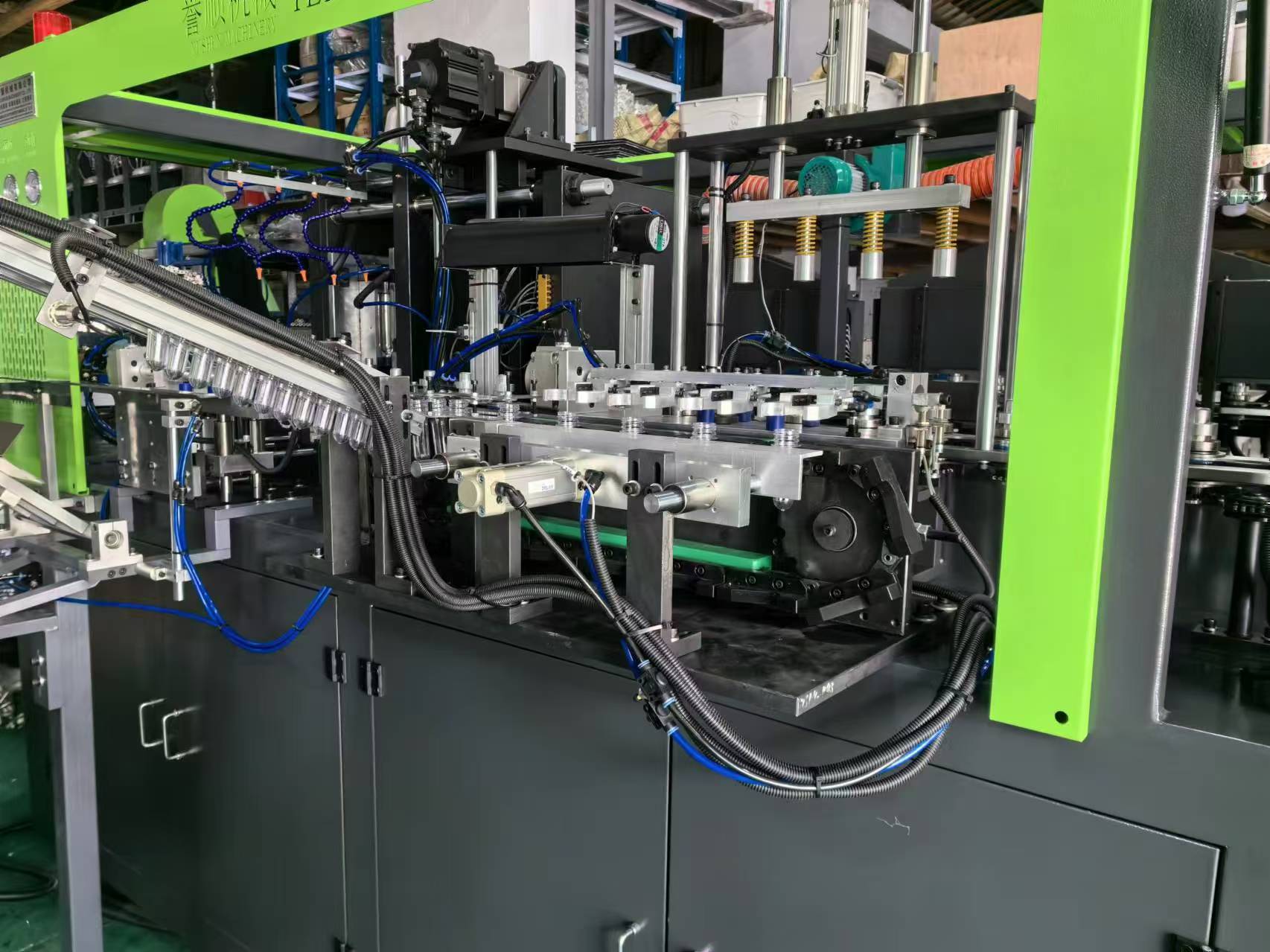
The global blow molding machine industry is undergoing a transformation in 2026, driven by sustainability mandates, digitalization, and a decisive shift toward electric drive systems. As the market grows steadily—projected to reach $2.52 billion in 2026, with a compound annual growth rate of 4.57% through 2031—manufacturers are reshaping equipment design to meet evolving customer demands for efficiency, precision, and circular economy compatibility.
The Decisive Shift to All-Electric Machines
Perhaps the most significant technology trend in 2026 is the industry-wide pivot from hydraulic to all-electric blow molding machines. At major industry events, machinery manufacturers are showcasing electric systems almost exclusively, with research and development efforts concentrated on electric platforms.
Uniloy, for example, introduced its first all-electric injection blow molder at K 2025, the UIB 129.E, which consumes up to 60% less energy than comparable hydraulic systems—drawing only 18 kilowatts under normal operation. Similarly, Kautex expanded its KEB line with an all-electric "Green" series designed for medium-output production, emphasizing energy efficiency and reduced operating costs. Automa by Magic launched the entirely new AbM series of all-electric continuous extrusion shuttle machines, incorporating regenerative energy recovery systems that store braking energy and feed it back into the circuit.
Why this matters for your operation: Electric machines deliver lower energy costs, improved repeatability, reduced maintenance, and quieter operation—benefits that translate directly to lower cost per bottle and higher machine uptime.
AI-Powered Controls: Making Machines Easier to Use
Artificial intelligence is emerging as a competitive differentiator in 2026. Machinery manufacturers are embedding AI-powered controls to simplify machine operation and reduce reliance on highly specialized personnel.
BBM demonstrated a prototype user-friendly control system described as "like ChatGPT for blow molders," enabling operators to interact with the machine intuitively. AI algorithms are being integrated to fine-tune mold pressure, stretch ratios, and blow sequencing in real time, enhancing both productivity and bottle quality. The technology helps compensate for the growing technical talent shortage in manufacturing hubs by making complex machines more accessible to operators with varying experience levels.
Key benefits: Faster setup, reduced training time, and consistent quality even with varying operator skill levels.
Industry 4.0: IoT, Remote Monitoring, and Predictive Maintenance
Modern blow molding systems in 2026 are increasingly integrated with Industrial Internet of Things (IIoT) frameworks. Real-time monitoring of heating profiles, blowing pressure, and material distribution is becoming standard. Cloud-based monitoring and predictive maintenance capabilities allow technical experts to evaluate data remotely and troubleshoot issues without being physically present.
Manufacturers are embedding IIoT sensors and analytics into new equipment to provide operational insights that support predictive maintenance, reduce unplanned downtime, and enable data-driven service contracts. The integration of digital-twin controls and predictive analytics helps improve uptime, compress changeover windows, and reduce energy consumption.
The shift toward "Combi" blocks (blow-fill-cap systems) that integrate blow molding directly with filling lines is also gaining traction, reducing footprint and energy needs while improving plant hygiene.
Sustainability: rPET Processing and Lightweighting
Sustainability has moved from marketing to engineering practice in 2026. The global push for packaging with 50% to 100% recycled content is driving demand for machines capable of processing recycled PET (rPET) without compromising container integrity.
European regulations, particularly the EU Packaging and Packaging Waste Regulation (PPWR), are accelerating this trend. Major players like Sidel, Krones, and KHS are making substantial investments in blow molding solutions anchored on energy efficiency, lightweighting, and rPET integration. Lightweighting—reducing bottle weight while maintaining strength—is a key competitive focus, with technology advances such as minting and laser heating enabling significant material savings.
Coca-Cola's redesign of its 20-ounce bottle from 21 grams to 18.5 grams illustrates the industry's commitment to lightweighting, eliminating material equivalent to 800 million bottles.
Electric Servo Drive Systems: Precision and Energy Efficiency
The transition to electric and hybrid drive systems continues to accelerate in 2026. All-electric and servo-hydraulic systems are replacing traditional pneumatic and hydraulic machines to reduce energy consumption by up to 40%, while delivering greater repeatability and reduced maintenance.
Nissei ASB introduced a redesigned one-step machine, the ASB-70DHP/50E, where all major movements are now electric, including the advanced injection unit and preform stretching. Servo-driven stretch rods improve molding consistency, especially with sensitive resins or complex designs.
Drive type considerations now rank as a primary procurement factor, with buyers weighing tradeoffs between energy efficiency, maintenance complexity, and dynamic response.
Automation Levels: Toward Fully Automatic, "Lights-Out" Operations
Talent shortages are pushing factories toward automated, high-speed operations. Automatic machines held 71.55% of the market share in 2025, and that share is growing. Manufacturers now bundle predictive-maintenance subscriptions and real-time OEE dashboards to reduce manual touches and mitigate the skilled labor deficit.
Semi-automatic models persist in pilot lines and specialty applications, but their growth significantly lags fully automated peers. Government stimulus for smart manufacturing further tilts spending to connected machines that feed production data into enterprise resource planning and carbon-reporting platforms.
Regional Growth Dynamics
Asia-Pacific remains the global powerhouse for blow molding machine demand, led by China, India, and Southeast Asian nations, with projected growth rates of 5.5% to 12.5%. Rapid urbanization and middle-class expansion are driving bottled beverage consumption, and domestic Chinese players are increasingly competing with European manufacturers on both price and technology.
Europe remains the technological leader, heavily influenced by the European Green Deal and unprecedented demand for machines capable of 100% rPET processing with energy-recovery systems. North America shows strong adoption of on-site blow molding, with a significant reshoring trend in plastics investment.
Outlook for YUSHUN Customers
For YUSHUN as a professional manufacturer of blow molding machines, these trends highlight the importance of delivering equipment that is:
All-electric or servo-hybrid for energy efficiency and precision
AI-ready with user-friendly controls that simplify operation
IoT-connected with remote monitoring and predictive maintenance capabilities
rPET-compatible for high percentages of recycled content
Lightweighting-optimized with advanced heating control and stretch precision
Automated for high-speed, continuous "lights-out" production