
Choosing the right blow molding machine is one of the most critical decisions for any PET bottle manufacturing operation. Two primary options dominate the market: semi-automatic and fully automatic blow molding machines. Each offers distinct advantages depending on your production volume, budget, labor availability, and quality requirements. At YUSHUN, we manufacture both types, allowing us to provide an unbiased perspective to help you make the right choice for your specific needs.
Understanding the Difference
Semi-Automatic Blow Molding Machines
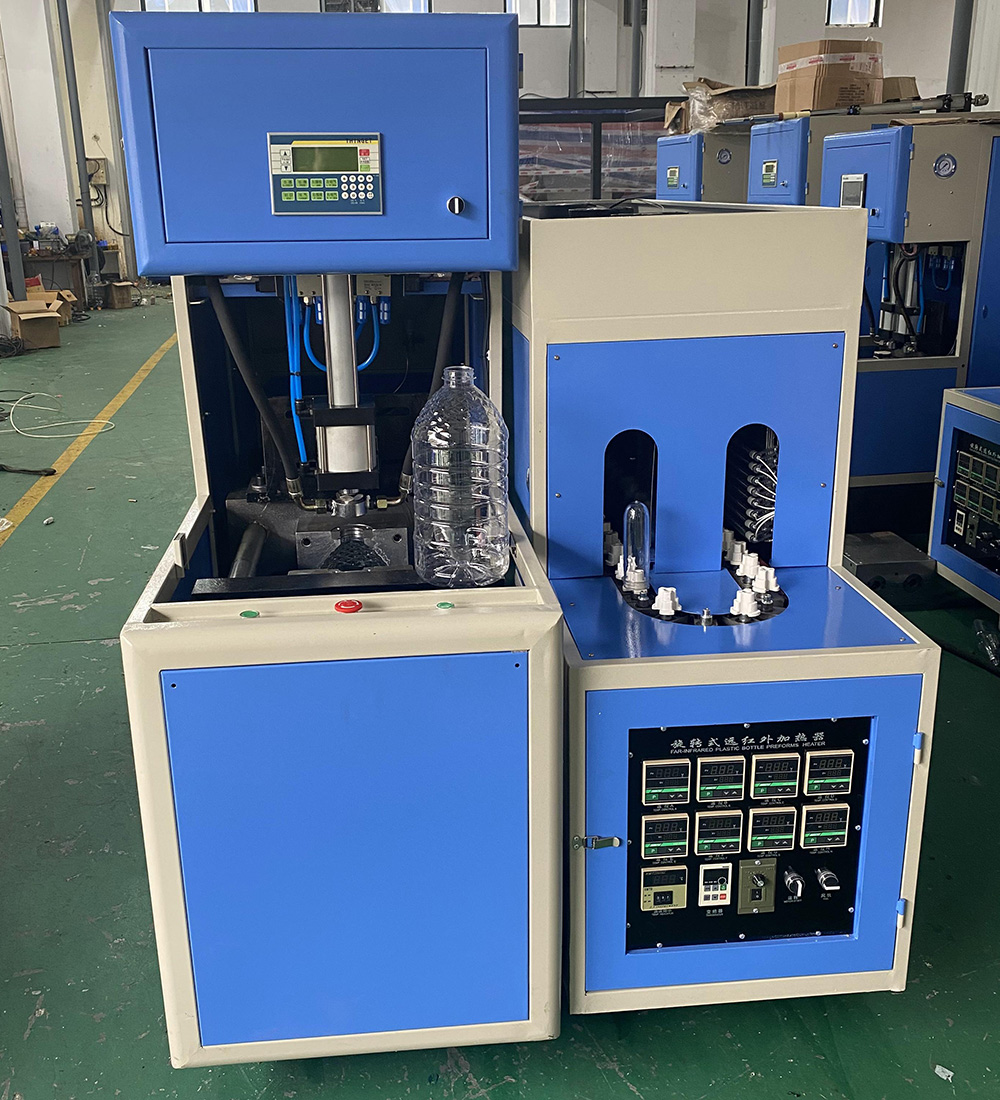
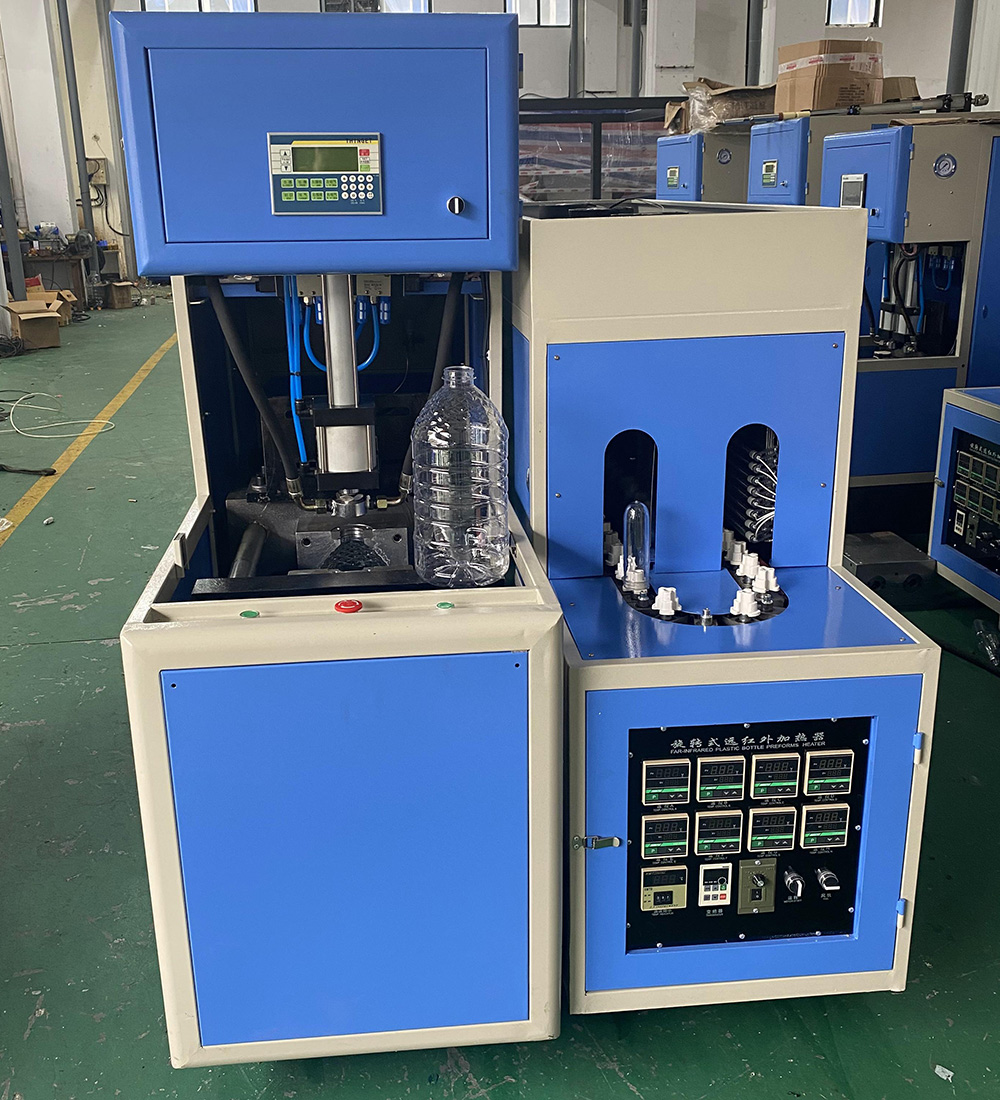
Semi-automatic machines require manual preform loading by an operator. The operator places heated preforms into the mold cavity, then initiates the blowing cycle. After the bottle is formed, the operator removes the finished bottle and repeats the process. This design offers simplicity, flexibility, and lower initial investment.
Typical output range: 300 to 1,200 bottles per hour, depending on bottle size and operator skill
Fully Automatic Blow Molding Machines
Fully automatic machines handle the entire process without manual intervention. Preforms are loaded automatically from a bulk hopper, conveyed through the heating oven, transferred to the mold station, blown, and then ejected onto a conveyor system. This design maximizes output while minimizing labor requirements.
Typical output range: 1,500 to 10,000+ bottles per hour, depending on cavity count and machine specifications
Detailed Comparison
| Factor | Semi-Automatic | Fully Automatic |
|---|---|---|
| Initial Investment | Lower – ideal for startups and growing businesses | Higher – requires significant capital |
| Production Speed | 300-1,200 bottles/hour | 1,500-10,000+ bottles/hour |
| Labor Requirement | 1-2 operators per machine | Minimal – one operator can manage multiple machines |
| Labor Cost per Bottle | Higher | Much lower |
| Changeover Time | Quick – typically 15-30 minutes | Longer – 1-2 hours typically |
| Floor Space | Compact footprint | Larger footprint |
| Maintenance Complexity | Simple – easy to troubleshoot | More complex – requires trained technicians |
| Flexibility | Excellent for multiple bottle sizes | Limited – best for dedicated production |
| Energy Efficiency | Moderate | Higher due to optimized cycles |
| Best For | Small to medium production, custom runs | High-volume, continuous production |
Semi-Automatic Blow Molding Machines: The Right Choice For...
Startups and Small Businesses
If you are entering the bottle manufacturing market or testing new product lines, a semi-automatic machine offers the lowest risk entry point. The lower initial investment preserves capital for other needs such as molds, raw materials, and marketing.
Low to Medium Production Volumes
For businesses requiring 300 to 1,200 bottles per hour, a semi-automatic machine provides adequate capacity without over-investing in automation. This range covers many small to medium-sized bottling operations.
Multiple Bottle Sizes and Frequent Changeovers
Semi-automatic machines excel at quick changeovers. If you produce many different bottle shapes or run small batches, the ability to switch molds and adjust settings in 15-30 minutes is a significant advantage.
Limited Floor Space
Semi-automatic machines have a smaller footprint, making them suitable for facilities where space is at a premium.
Lower Automation Requirements
Some markets have lower labor costs, making manual loading economically viable. In these situations, the higher labor cost per bottle may be offset by the significantly lower machine investment.
Custom and Specialty Bottles
For non-standard bottle designs or applications requiring special handling, the direct operator control of a semi-automatic machine allows for greater process flexibility.
Fully Automatic Blow Molding Machines: The Right Choice For...
High-Volume Production
If you need 1,500 or more bottles per hour, fully automatic machines are the only practical solution. The output capacity justifies the higher investment through economies of scale.
Continuous, 24/7 Operations
For factories running multiple shifts or continuous production, fully automatic machines maximize output while minimizing labor costs. One operator can manage several machines simultaneously.
Low Labor Cost Markets
As labor costs rise, the payback period for fully automatic equipment shortens. The reduction in labor cost per bottle often justifies the higher machine investment within 12-24 months.
Dedicated Production Lines
If you produce the same bottle size and design continuously, the longer changeover time of fully automatic machines becomes irrelevant. The consistent output and lower per-bottle cost are the primary benefits.
Large-Scale Manufacturing
For established manufacturers with significant production volumes, the higher output and lower operating cost of fully automatic machines are essential for remaining competitive.
Key Considerations for Your Decision
Calculate Your True Production Needs
Be realistic about your current and near-term production requirements. Many buyers overestimate needed capacity and pay for automation they do not yet require. Conversely, some underestimate growth and quickly outgrow a semi-automatic machine.
Recommendation: Project your production needs for the next 2-3 years and choose a machine that can handle approximately 80% of that capacity, allowing room for growth without excessive over-investment.
Analyze Your Labor Costs
Labor cost per bottle is the key variable in the semi-automatic vs fully automatic decision. Calculate your fully loaded labor cost including wages, benefits, supervision, and facility overhead. Then determine how many hours of operation are needed to recover the additional investment of a fully automatic machine through labor savings.
Rule of thumb: In high-wage markets, fully automatic machines often pay for themselves quickly. In lower-wage markets, semi-automatic machines may remain cost-effective indefinitely.
Consider Your Product Mix
If you produce many different bottle types, sizes, or run small batches, the flexibility of semi-automatic machines is valuable. If you have one or two high-volume products, dedicated fully automatic lines make sense.
Evaluate Operator Skill Availability
Semi-automatic machines require attentive operators who load preforms consistently and maintain quality standards. Fully automatic machines shift quality responsibility to setup technicians and machine maintenance.
Plan for Growth
Some manufacturers start with a semi-automatic machine to establish their business, then add fully automatic capacity as volumes grow. The semi-automatic machine remains useful for smaller runs, specialty products, or as backup capacity.
YUSHUN Solutions for Both Needs
YUSHUN Semi-Automatic Blow Molding Machines
Our semi-automatic line offers:
Output: 300-1,200 bottles per hour
Quick changeover for multiple bottle sizes
User-friendly PLC controls
Energy-efficient infrared heating
Ideal for 350ml to 20L bottles
YUSHUN Fully Automatic Blow Molding Machines
Our fully automatic line features:
Output: 1,500-10,000+ bottles per hour
Automatic preform loading and bottle ejection
Servo drive systems for precision and energy savings
Multi-cavity options for increased output
High-pressure air recovery for reduced energy costs
Real-World Scenarios
Scenario A: Startup Water Bottling Company
A new company plans to produce 5-gallon water bottles for local delivery. Expected demand: 8,000 bottles per week.
Recommendation: Semi-automatic machine
Rationale: Lower initial investment preserves capital for molds, bottles, and delivery vehicles. The flexibility allows testing different bottle designs. As volume grows to 20,000+ bottles per week, add fully automatic capacity while keeping the semi-automatic machine for specialty runs.
Scenario B: Established Beverage Manufacturer
A juice company produces 50,000 bottles per day of two standard sizes.
Recommendation: Fully automatic machines
Rationale: High volume justifies automation investment. Low labor cost per bottle improves competitiveness. Dedicated lines for each size minimize changeover requirements.
Scenario C: Contract Packager
A contract packaging company produces bottles for multiple customers with frequent design changes.
Recommendation: Semi-automatic machines
Rationale: Quick changeover capability is essential for profitability with short production runs. The flexibility to handle various bottle shapes and sizes outweighs the lower per-bottle labor efficiency.
Summary Decision Guide
| Your Situation | Recommended Machine |
|---|---|
| New business, limited capital | Semi-automatic |
| Production under 1,500 bottles/hour | Semi-automatic |
| Frequent bottle size changes | Semi-automatic |
| Limited floor space | Semi-automatic |
| High labor cost market | Fully automatic |
| Production over 3,000 bottles/hour | Fully automatic |
| 24/7 continuous operation | Fully automatic |
| Low product variety, high volume | Fully automatic |
Conclusion
Both semi-automatic and fully automatic blow molding machines have their place in the PET bottle manufacturing industry. The right choice depends on your specific production requirements, capital availability, labor costs, and growth plans.
YUSHUN manufactures both semi-automatic and fully automatic blow molding machines, allowing us to provide the right solution for your unique situation. Our team can help you analyze your production needs and recommend the optimal configuration for your operation.
Contact YUSHUN today to discuss your bottle production requirements and receive expert guidance on choosing the right machine for your line.