
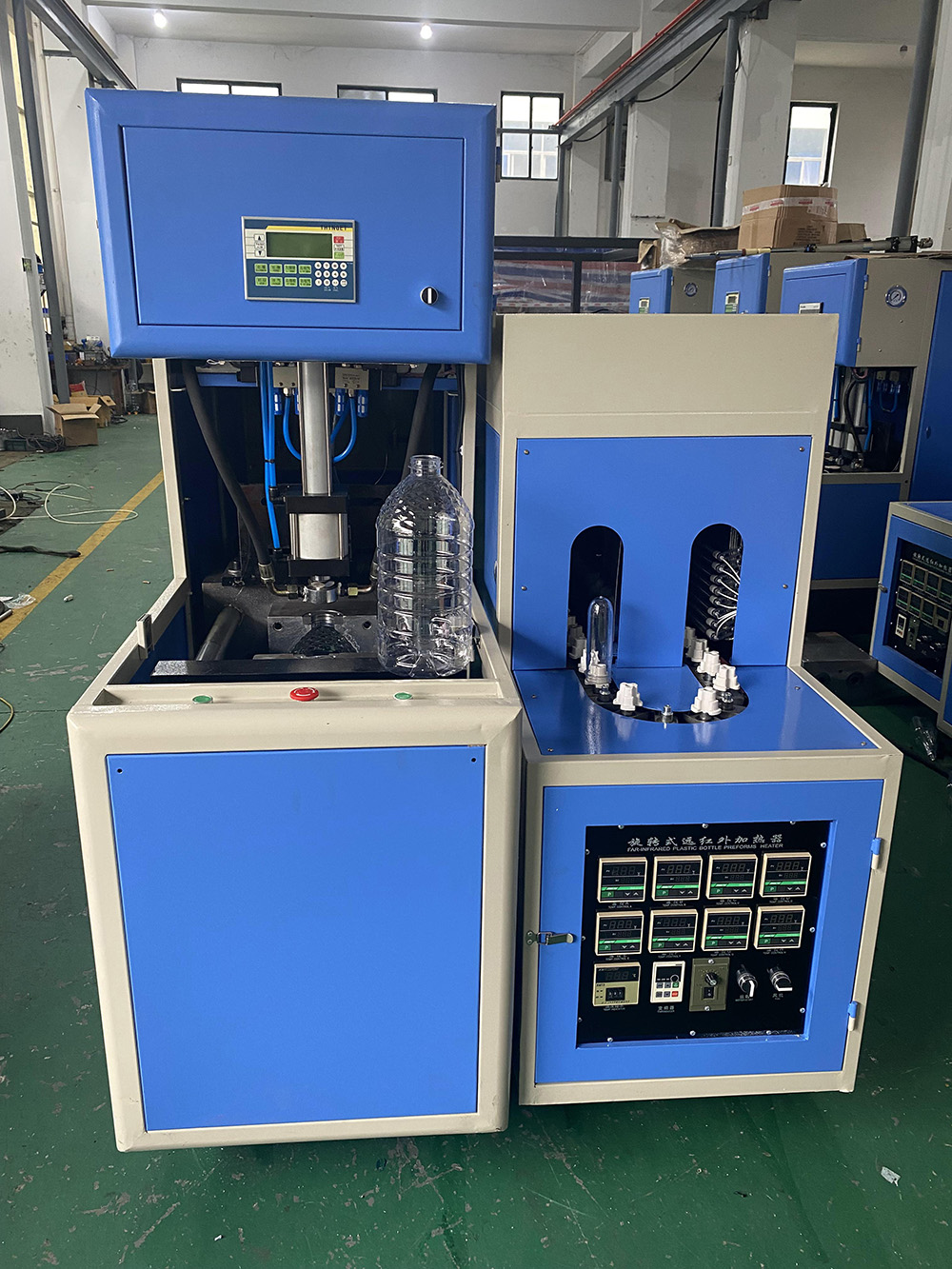
In PET blow molding, heating is the single largest consumer of electricity. The infrared ovens that warm preforms to their optimal stretching temperature can account for 50-70% of a machine's total energy consumption. For manufacturers running multiple shifts, this represents a substantial operating expense. The good news is that strategic heating optimization can reduce electricity consumption by 30% or more without compromising bottle quality or production speed. This guide from YUSHUN explains practical methods to achieve these savings.
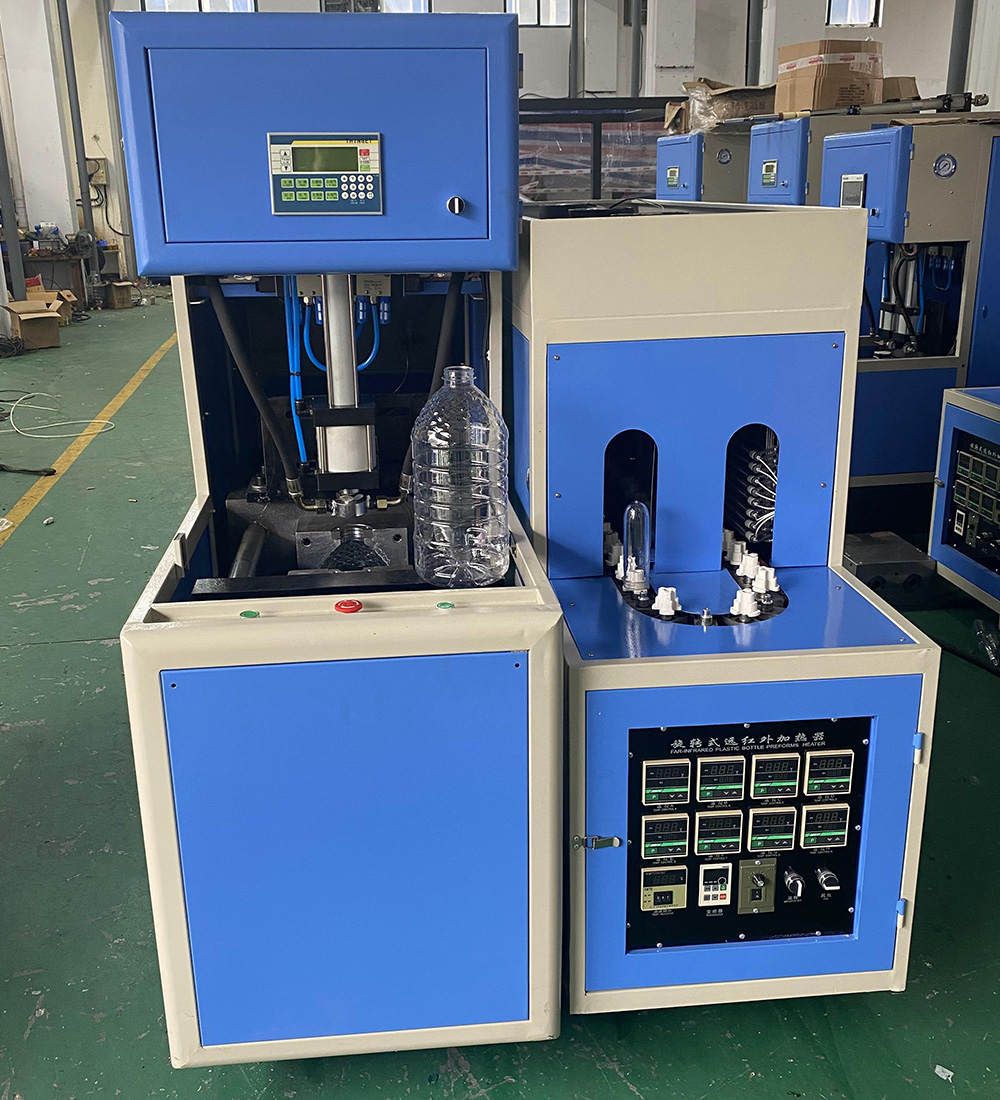
Why Heating Consumes So Much Energy
Understanding where energy goes helps identify savings opportunities. In a typical blow molding machine:
Heating ovens consume 50-70% of total machine power
Compressed air systems consume 15-25%
Motors and drives consume 10-15%
Cooling and auxiliary systems consume 5-10%
Heating represents the largest and often most addressable energy cost. Unlike compressed air or motor systems, heating efficiency is highly dependent on maintenance practices and operating parameters that operators can directly control.
The 30% Savings Target: Is It Realistic?
Yes. Manufacturers implementing comprehensive heating optimization typically achieve savings in the range of 25-35%. Some have reported even higher reductions. These savings come from multiple small improvements that add up:
| Optimization Measure | Typical Savings |
|---|---|
| Reflector cleaning/replacement | 5-10% |
| Lamp replacement strategy | 5-8% |
| Oven insulation improvement | 4-7% |
| Zone temperature optimization | 4-6% |
| Preform heating profile adjustment | 3-5% |
| Waste heat reduction | 3-5% |
| Total potential savings | 24-41% |
1. Clean and Maintain Infrared Reflectors
How Reflectors Work
Infrared lamps radiate heat in all directions. Reflectors behind and around the lamps direct this heat toward the preform. Clean, efficient reflectors can increase heating effectiveness by 30-50% compared to dirty or degraded reflectors.
The Problem with Dirty Reflectors
Over time, reflectors accumulate dust, polymer residue, and oxidation. A dirty reflector absorbs rather than reflects heat, reducing the energy reaching preforms. To compensate, operators typically increase lamp power or extend heating time, wasting electricity.
Recommended Practice
Clean reflectors weekly for machines running multiple shifts
Clean reflectors bi-weekly for single-shift operations
Replace reflectors annually or when cleaning no longer restores reflectivity
Use appropriate cleaning methods – avoid abrasives that damage reflective surfaces
Expected Savings
Proper reflector maintenance alone typically reduces heating energy consumption by 5-10%. For a machine consuming 15 kW for heating, this represents 0.75-1.5 kW of continuous savings.
2. Implement Strategic Lamp Replacement
The Efficiency Curve of Infrared Lamps
Infrared lamps do not fail suddenly. Their efficiency degrades gradually over time. A lamp at 80% of its rated life may produce only 70-80% of its original infrared output while consuming the same electricity.
Common but Costly Practice
Many manufacturers run lamps until they fail. This means operating inefficient lamps for extended periods, wasting electricity and potentially affecting bottle quality.
Recommended Practice
Replace lamps at 80-90% of rated life rather than waiting for failure
Replace all lamps in a zone simultaneously for consistent heating
Track lamp age and hours using maintenance software or logs
Consider higher-quality lamps with longer life and slower degradation
Expected Savings
Proactive lamp replacement typically saves 5-8% on heating energy while improving bottle quality consistency.
3. Optimize Oven Insulation
Heat Loss Pathways
Heating ovens lose energy through:
Radiation from hot surfaces to the surrounding environment
Convection as heated air escapes through gaps
Conduction through oven walls to mounting structures
Assessment Method
Use a thermal imaging camera or simple hand test to identify hot spots on oven exteriors. Any surface too hot to touch comfortably is losing energy.
Recommended Practice
Add insulation to uninsulated or under-insulated oven surfaces
Seal gaps around preform entry and exit points
Repair damaged insulation promptly
Consider double-wall construction for new ovens or major retrofits
Expected Savings
Improved insulation typically saves 4-7% on heating energy. For ovens with no existing insulation, savings can be higher.
4. Optimize Zone Temperature Settings
The Problem of Over-Heating
Many operators use higher temperatures than necessary as a safety margin. Each degree above the optimal temperature wastes energy and may degrade PET material.
Finding the Optimal Temperature
The ideal preform temperature varies by:
Preform weight and thickness
Bottle size and shape
Production speed
Ambient conditions
Recommended Practice
Conduct temperature trials to find minimum temperature that produces quality bottles
Document optimal settings for each bottle type
Review settings quarterly as ambient conditions change
Use pyrometers or thermal imagers to verify preform surface temperatures
Expected Savings
Temperature optimization typically saves 4-6% on heating energy without affecting quality.
5. Adjust Preform Heating Profile
Uneven Heating Wastes Energy
Preforms do not require uniform heat across their entire length. Different zones require different temperatures:
Neck finish should remain cool to prevent crystallization
Body requires uniform heat for even stretching
Bottom often needs additional heat for complete formation
Common Inefficiency
Many machines apply more heat to the neck area than necessary, wasting energy and potentially damaging the neck finish.
Recommended Practice
Reduce power to neck-zone lamps to minimum required
Focus heating on body and bottom zones
Use zone-specific temperature profiling for each bottle design
Verify profile effectiveness through bottle quality inspection
Expected Savings
Heating profile optimization typically saves 3-5% on heating energy.
6. Reduce Waste Heat at Preform Entry/Exit
The Gap Problem
Preforms enter and exit the oven through openings. These openings allow heated air to escape and cool air to enter, reducing efficiency.
Recommended Practice
Minimize opening sizes to smallest possible for preform passage
Install flexible seals around preform entry/exit points where feasible
Adjust oven positioning to reduce gap sizes
Consider air curtains for larger openings
Expected Savings
Reducing waste heat loss typically saves 3-5% on heating energy.
7. Implement Preheat Recovery (for Two-Step Processes)
How Preheat Recovery Works
In two-step blow molding, preforms are injection molded, cooled, stored, then reheated for blowing. Some advanced systems capture heat from the injection molding process to pre-warm preforms before they enter the blow molding oven.
Application
This technique is most applicable to integrated or in-line operations where injection molding and blow molding are co-located.
Expected Savings
Preheat recovery can reduce blow molding oven energy consumption by 10-20% in applicable configurations.
8. Use Variable Power Control
The Problem with Fixed Power Settings
Traditional lamp controls use simple on/off or fixed power settings. This approach cannot respond to changing conditions such as ambient temperature variations or preform temperature differences.
Better Approach
Variable power controls (SCR or phase-angle fired controllers) allow precise adjustment of lamp output. When combined with temperature feedback, these systems maintain optimal preform temperature while using only the power needed.
Recommended Practice
Upgrade to SCR controllers if currently using contactor-based controls
Implement closed-loop temperature control using infrared sensors
Use power monitoring to verify efficiency gains
Expected Savings
Variable power control typically saves 5-10% compared to fixed power settings.
9. Maintain Consistent Ambient Conditions
The Impact of Environment
Oven efficiency is affected by:
Room temperature – Cold ambient air increases heat loss
Air movement – Drafts carry heat away from ovens
Humidity – Moisture absorbs infrared energy
Recommended Practice
Maintain consistent room temperature (20-25°C recommended)
Eliminate drafts near oven openings
Control humidity in the production area
Avoid placing ovens near doors or air handlers
Expected Savings
Environmental optimization typically saves 2-4% on heating energy while improving process consistency.
10. Measure and Monitor Energy Consumption
You Cannot Manage What You Do Not Measure
Without energy monitoring, it is impossible to verify savings or identify new opportunities.
Recommended Practice
Install sub-metering for heating systems
Track energy per thousand bottles (not total consumption)
Establish baseline consumption before implementing changes
Monitor continuously to detect degradation or drift
Set improvement targets and review progress monthly
Required Investment
Simple energy meters cost a few hundred dollars and typically pay for themselves within weeks through identified savings.
Implementing Your Heating Optimization Program
Phase 1: Quick Wins (Week 1-2)
Clean all reflectors
Replace oldest lamps
Seal obvious oven gaps
Reduce neck-zone power settings
Record baseline energy consumption
Expected savings: 10-15%
Phase 2: Systematic Improvements (Month 1-2)
Develop lamp replacement schedule
Add insulation to oven surfaces
Optimize zone temperatures through trials
Implement temperature monitoring
Expected savings: Additional 10-15%
Phase 3: Advanced Optimization (Month 2-6)
Install variable power controls
Implement closed-loop temperature control
Add energy monitoring and reporting
Train operators on efficiency practices
Expected savings: Additional 5-10%
Total Achievable Savings: 25-40%
Case Study: Typical Results
A medium-sized bottling facility operating two blow molding machines, each running 16 hours per day, implemented the optimization measures described above:
| Metric | Before | After | Improvement |
|---|---|---|---|
| Heating power consumption | 28 kW average | 19 kW average | 32% reduction |
| Annual heating electricity | 163,520 kWh | 110,960 kWh | 52,560 kWh saved |
| Annual electricity cost (at $0.12/kWh) | $19,622 | $13,315 | $6,307 saved per machine |
| Lamp life | 4,000 hours | 5,500 hours | 38% longer |
| Bottle quality defects | 1.8% | 1.2% | 0.6% reduction |
The total annual savings for two machines exceeded $12,600, with minimal capital investment.
YUSHUN Energy-Efficient Blow Molding Machines
While these optimization techniques apply to any blow molding machine, starting with an efficient platform makes savings easier to achieve. YUSHUN blow molding machines incorporate several energy-saving features:
High-efficiency infrared lamps with longer life and better output
Well-insulated oven construction minimizing heat loss
PID temperature control for precise, efficient heating
Optional air recovery systems reducing compressed air energy
Servo drive options for overall machine efficiency
Conclusion
Saving 30% on blow molding machine heating electricity is achievable through a combination of maintenance improvements, operating adjustments, and strategic upgrades. The most impactful measures – cleaning reflectors, strategic lamp replacement, and insulation improvement – require minimal investment and can be implemented immediately.
For manufacturers serious about reducing energy costs, we recommend establishing an ongoing heating optimization program with regular review of performance metrics. The savings accumulate year after year, directly improving your bottom line.
Contact YUSHUN today to learn more about energy-efficient blow molding solutions and optimization techniques for your specific operation.