
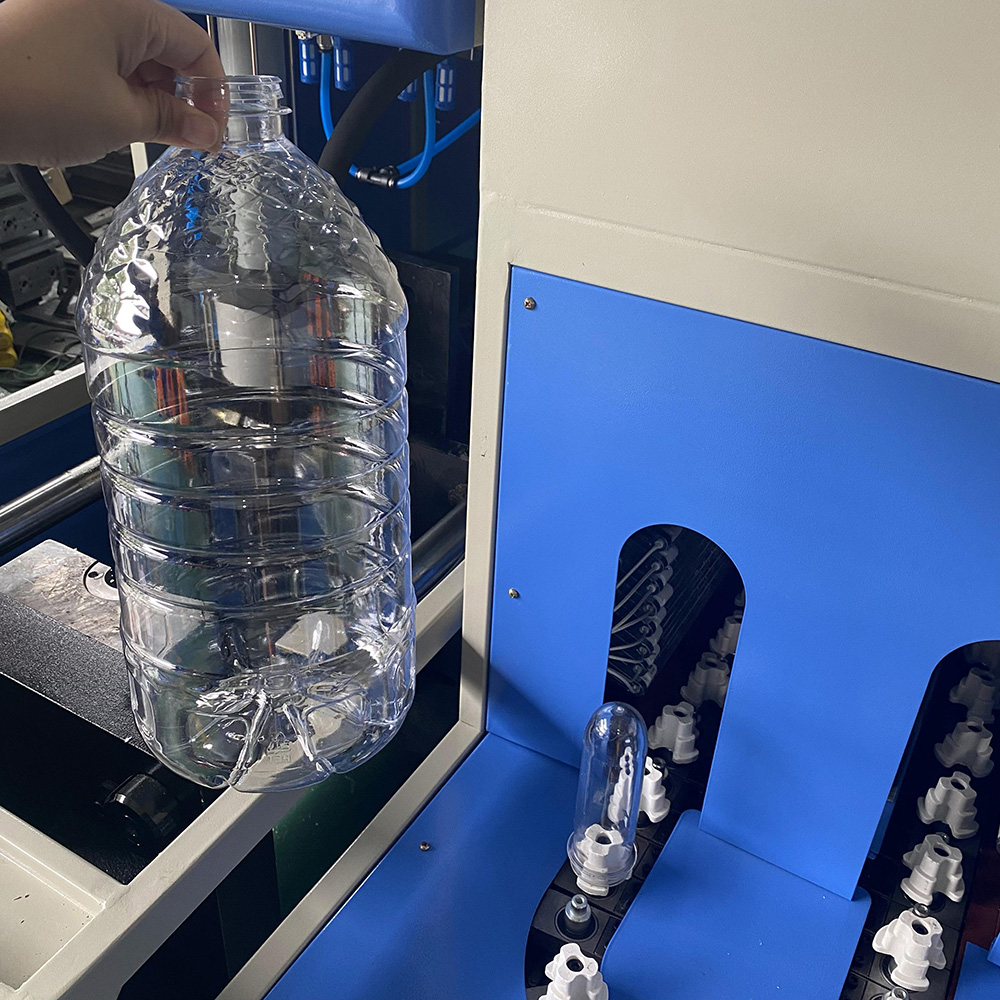
In PET blow molding, the journey from preform to perfect bottle passes through one critical piece of equipment: the oven. Before a preform can be stretched and blown into a bottle, it must be heated to the precise temperature where PET becomes pliable but not molten. Too cold, and the preform will not stretch properly, creating weak spots and incomplete bottles. Too hot, and the PET will crystallize, turning cloudy and brittle.
Between these extremes lies a narrow temperature window where perfect bottles are made. Finding and maintaining that window for every preform, every cavity, every cycle, is the art and science of oven temperature profiling.
At Yushun, we have mastered this science. Our advanced oven technology delivers precise, consistent preform heating that transforms ordinary preforms into exceptional bottles. This article explains how oven temperature profiling works and why it is critical for bottle quality.
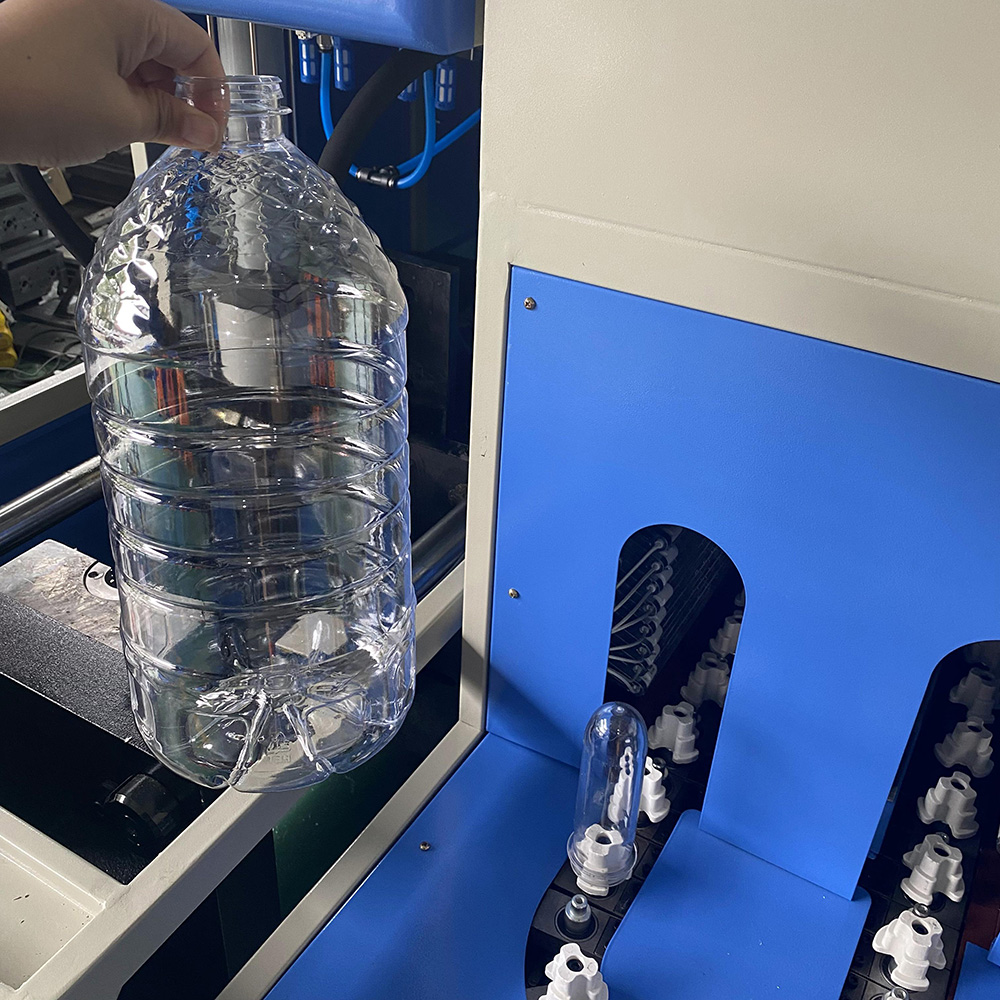
Why Preform Heating Matters
The preform heating stage sets the foundation for everything that follows. If the preform is not heated correctly, no amount of stretch rod precision or blow pressure adjustment can save the bottle.
The Critical Temperature Window
PET must be heated to a specific temperature range for optimal stretch blow molding. The target temperature is typically 90 to 110 degrees Celsius for the preform body. The gate area at the base requires higher temperature, typically 100 to 120 degrees Celsius, to ensure complete stretching. The neck finish must remain cool, typically below 60 degrees Celsius, to maintain its crystallized structure.
If the preform is too cold, the PET resists stretching, creating uneven wall thickness and potential bottle failure. If the preform is too hot, the PET becomes amorphous, creating haze, crystallization, and weak points.
The Consequences of Poor Temperature Control
Poor temperature control leads to a range of bottle defects. Gate blush appears as a white haze at the bottle base, caused by insufficient gate heating. Preform hanging occurs when the preform does not stretch fully, resulting in incomplete bottle formation. Uneven wall thickness creates weak spots that may fail under pressure or impact. Crystallization creates cloudy white areas that compromise bottle clarity and strength. Inconsistent blow ratios cause bottle dimensions to vary from the design specification.
Yushun's oven technology is designed to eliminate these defects through precise, uniform preform heating.
Understanding Oven Temperature Profiling
Oven temperature profiling is the process of creating a specific temperature distribution along the length of the preform. Different areas of the preform require different temperatures for optimal stretching.
The Axial Temperature Profile
The axial temperature profile refers to temperature variation from the neck to the gate along the preform axis. A typical profile has the coolest temperature at the neck, which must remain rigid and crystallized. The body temperature is optimized for uniform stretching. The gate area has the highest temperature to ensure complete stretching into the bottle base.
The specific profile required depends on the bottle design. Tall bottles require more heat in the lower preform body to stretch material to the full height. Wide bottles require more heat in the mid-body for radial expansion. Heavy base bottles require higher gate temperatures for thick base formation.
The Circumferential Temperature Profile
The circumferential temperature profile refers to temperature uniformity around the preform circumference. Any variation around the preform creates uneven wall thickness in the finished bottle.
Yushun's oven design ensures exceptional circumferential uniformity through preform rotation and balanced infrared heating.
Yushun's Oven Technology
Yushun's ovens incorporate several advanced technologies for precise temperature profiling.
Infrared Heating System
Yushun ovens use high-efficiency infrared lamps that deliver focused heat to the preform surface. Key features include individual lamp control for precise temperature adjustment by zone, rapid response for quick temperature changes during production, long lamp life for consistent performance over millions of cycles, and energy efficiency that reduces power consumption.
Lamp Configuration
The number and arrangement of infrared lamps determine the oven's heating capacity and profile flexibility. Yushun ovens are configured with multiple lamp zones along the preform length, typically 6 to 10 zones depending on bottle size and application. Additional lamps can be focused on the gate area for enhanced base heating. Reflector designs concentrate heat where it is needed most.
Preform Rotation System
Preform rotation ensures that all sides of the preform receive equal heat exposure. Yushun's rotation system features variable speed control for different preform sizes, smooth rotation to prevent vibration marks, and precise alignment between preforms and lamps.
Independent Zone Control
Each oven zone has independent temperature control, allowing precise profiling of the axial temperature curve. Zone temperatures can be adjusted independently to create custom profiles for different bottle designs. Profiles can be stored and recalled for quick changeovers between products. Real-time monitoring ensures consistent temperatures throughout production.
Creating the Perfect Temperature Profile
Creating the optimal temperature profile requires understanding the relationship between preform heating and bottle formation.
Profile Development Process
The process begins with preform design analysis. Yushun engineers analyze the preform geometry, including wall thickness distribution, weight, and neck finish type. Next, bottle design requirements are considered, including height, diameter, base design, and target weight.
Based on these inputs, an initial temperature profile is developed using thermal simulation software. This profile is tested on the blow molding line, with sample bottles inspected for quality. The profile is then refined based on bottle inspection results. Final parameters are documented for production use.
Profile Adjustment Guidelines
If the bottle base shows gate blush or incomplete formation, increase gate zone temperature. If the bottle has uneven wall thickness or weak spots, adjust body zone temperatures. If the bottle shows crystallization or haze, reduce overall temperature or improve cooling. If the bottle has neck distortion, reduce neck zone heating or improve neck cooling.
Real-Time Temperature Monitoring
Yushun ovens feature real-time temperature monitoring with infrared sensors that measure preform surface temperature at multiple points. Closed-loop control automatically adjusts lamp power to maintain target temperatures. Data logging records temperature profiles for quality documentation and process traceability.
Energy Efficiency in Oven Design
Yushun's ovens are designed for energy efficiency without compromising heating precision.
High-Efficiency Lamps
Yushun uses infrared lamps with high radiant efficiency, converting more electrical energy into useful heat and reducing waste heat that warms the surrounding environment.
Advanced Reflectors
Precision reflectors direct heat toward the preform and away from the oven housing. This improves heating efficiency while reducing energy consumption and keeping the external oven surface cooler for operator safety.
Insulated Construction
Multi-layer insulation retains heat within the oven chamber, reducing energy loss and improving temperature stability while lowering the facility cooling load.
Intelligent Power Control
Yushun ovens reduce power when preforms are not present, eliminating wasted energy during production interruptions. Automatic lamp aging compensation maintains consistent output as lamps age, preventing quality drift.
Common Heating Problems and Solutions
Problem: Inconsistent Bottle Quality
When bottle quality varies from cavity to cavity or cycle to cycle, the cause may be inconsistent heating. Solutions include verifying lamp output and condition, checking preform rotation consistency, confirming oven temperature stability, and inspecting for lamp aging or failure.
Problem: Gate Blush
Gate blush at the bottle base indicates insufficient gate heating. Solutions include increasing gate zone temperature, adding gate zone lamps, slowing line speed for more heat exposure, and verifying preform gate design.
Problem: Preform Hanging
Preform hanging during stretching indicates insufficient body heating. Solutions include increasing body zone temperatures, adding heating zones, slowing line speed, and verifying preform wall thickness.
Problem: Crystallization or Haze
Crystallization or haze indicates excessive heating. Solutions include reducing overall temperature, improving cooling, increasing line speed for less heat exposure, and verifying preform material quality.
Real-World Results: Yushun Oven Customers
Customer Case: Major Water Bottler
A major water bottler was experiencing inconsistent bottle quality due to poor temperature control on their existing blow molding line. Gate blush affected 3 to 5 percent of bottles, and wall thickness variation led to frequent bottle failures.
The company upgraded to a Yushun blow molding machine with advanced oven temperature profiling.
Gate blush was reduced from 5 percent to 0.2 percent. Wall thickness variation was reduced by 60 percent. Energy consumption decreased by 18 percent due to efficient lamp design. The payback period was achieved in 14 months.
Customer Case: Custom Bottle Manufacturer
A custom bottle manufacturer needed to produce a wide range of bottle shapes and sizes, each requiring a different temperature profile. Frequent changeovers and profile adjustments were consuming significant production time.
The company installed Yushun machines with programmable oven profiles and digital recipe storage.
Changeover time between bottle types decreased from 2 hours to 35 minutes. Profile setup time decreased from 45 minutes to 5 minutes with stored recipes. First-pass yield improved from 88 percent to 96 percent. The company now produces over 50 different bottle types on their Yushun machines.
The Yushun Oven Advantage
Yushun's oven technology delivers precise axial profiling with 6 to 10 independently controlled zones for custom temperature curves. Circumferential uniformity is ensured through preform rotation and balanced infrared heating. Energy efficiency is achieved with high-efficiency lamps, advanced reflectors, and intelligent power control.
Programmable recipes allow storage and recall of temperature profiles for quick changeovers. Real-time monitoring uses infrared sensors and closed-loop control for consistent temperatures. Easy maintenance features include accessible lamp replacement and modular zone design.
Conclusion: Perfect Bottles Start with Perfect Heating
The journey from preform to perfect bottle begins in the oven. No amount of downstream optimization can compensate for poor preform heating.
Yushun's advanced oven temperature profiling technology delivers the precise, uniform heating that perfect bottles demand. Through independent zone control, preform rotation, real-time monitoring, and energy-efficient design, Yushun ovens transform ordinary preforms into exceptional bottles.
Whether you produce water bottles, carbonated beverage bottles, hot-fill containers, or custom designs, Yushun has the oven technology to help you achieve perfect bottles, cycle after cycle.
Choose Yushun. Choose perfect heating. Choose perfect bottles.