
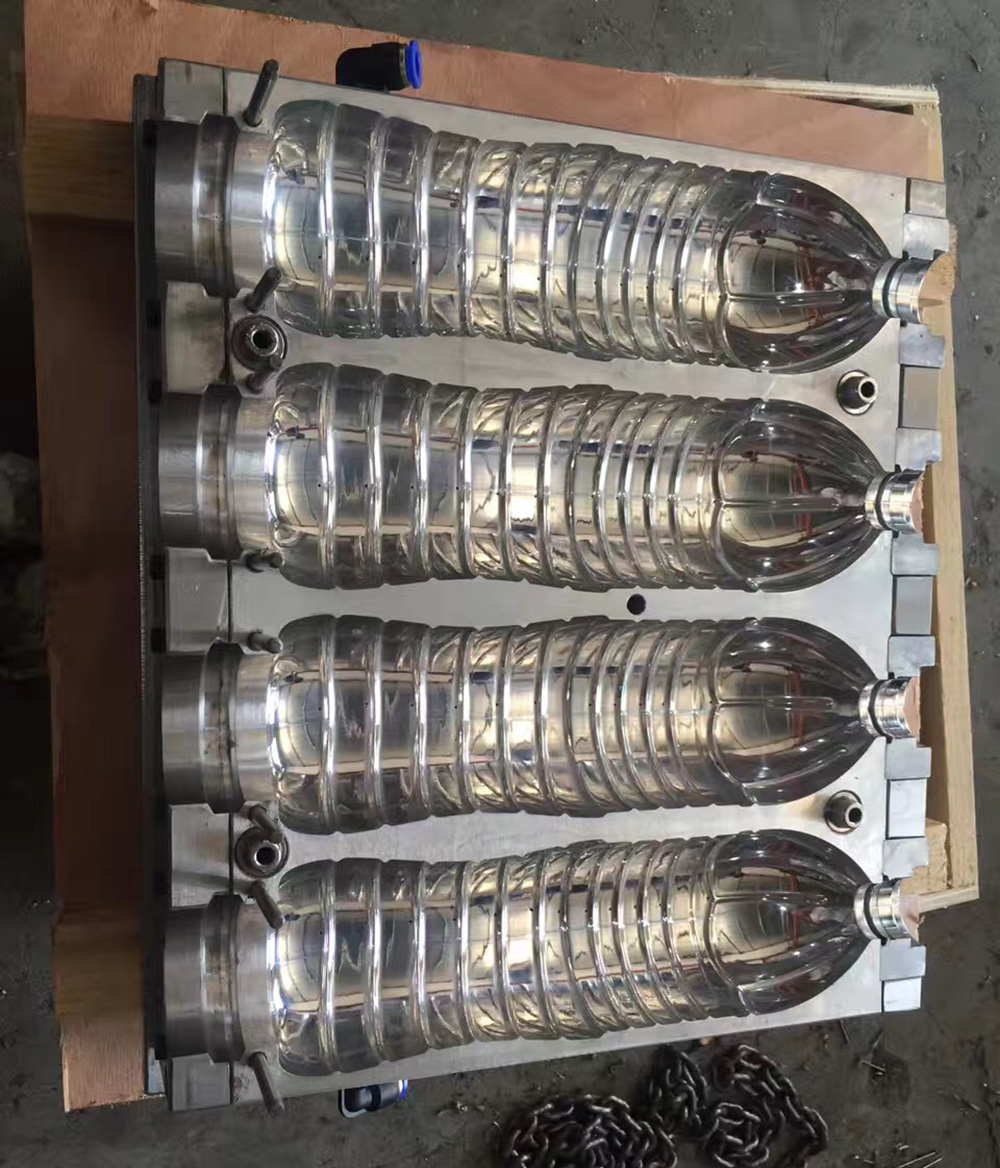
Carbonated soft drinks present a unique challenge to PET bottle manufacturers. Unlike still water bottles that only need to contain their contents, CSD bottles must hold pressure. Significant pressure. A typical carbonated beverage exerts an internal pressure of 3 to 5 bar, with spikes during handling and temperature changes that can reach 6 to 8 bar.
Under this pressure, a poorly designed bottle will deform, leak, or burst. A well-designed bottle will hold its shape, maintain its seal, and protect the product throughout its shelf life.
At Yushun, we have developed blow molding technology specifically optimized for CSD bottle production. This article explores how our machines and processes meet the demanding pressure requirements of carbonated beverages.
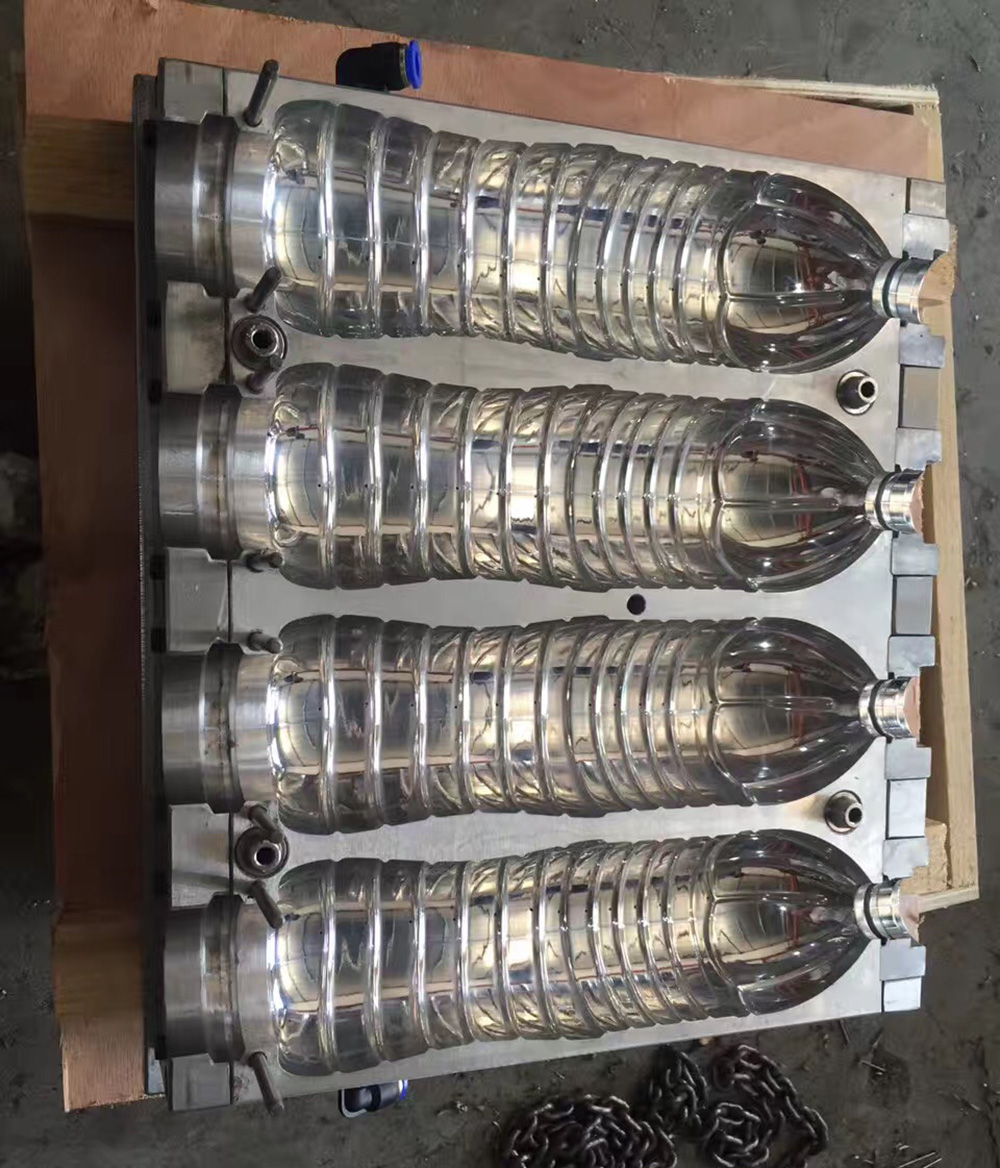
Understanding CSD Bottle Pressure Requirements
Before discussing solutions, it is essential to understand what CSD bottles must withstand.
Internal Pressure Fundamentals
Carbonated beverages contain dissolved carbon dioxide. When the bottle is sealed, this gas exerts pressure on the bottle walls in all directions. The pressure varies with temperature, increasing significantly when bottles warm up during storage or transport.
Typical CSD bottle pressure ranges from 3 to 4 bar at refrigeration temperature to 4 to 6 bar at room temperature, with spikes to 7 or 8 bar in hot conditions or rough handling.
Failure Modes Under Pressure
When a CSD bottle fails under pressure, the failure typically occurs in one of three areas. Base bulging is when the bottle base deforms outward, causing the bottle to become unstable and potentially tip over. Body creep is when the bottle body gradually expands over time, reducing internal pressure and affecting carbonation retention. Burst is when the bottle ruptures catastrophically, usually at a weak point in the base or side wall.
CSD bottle design must prevent all three failure modes while maintaining reasonable weight and cost.
The Yushun Approach to CSD Bottle Blow Molding
Yushun's CSD bottle technology focuses on four critical areas: preform design, material distribution, base engineering, and process control.
Critical Factor 1: Preform Design for Pressure
The preform is the starting point for CSD bottle strength. A well-designed preform distributes material where it is needed most for pressure resistance.
Gate Design for Base Strength
The gate area becomes the bottle base during blow molding. In CSD bottles, the base is the most pressure-critical area. The gate must be large enough to allow adequate material flow into the base but small enough to minimize gate blush. Yushun's preform designs feature optimized gate diameters for CSD applications, typically 3 to 5 millimeters depending on bottle size.
Wall Thickness Distribution
CSD preforms require different wall thickness distribution than still water preforms. The lower preform body, which forms the bottle base and lower side walls, requires extra material for pressure resistance. The upper body can be thinner since the bottle shoulders and neck experience lower stress. The neck finish must maintain its crystallized structure and sealing surface integrity.
Preform Weight Optimization
CSD bottles are typically heavier than still water bottles of the same volume. A 500ml CSD bottle may weigh 18 to 22 grams compared to 12 to 15 grams for still water. This additional material provides the burst resistance that carbonated beverages require.
Critical Factor 2: Material Distribution During Blow Molding
The blow molding process must distribute preform material precisely to achieve uniform pressure resistance.
Axial Material Distribution
During the stretch blow process, the stretch rod controls how material moves along the bottle axis. For CSD bottles, Yushun recommends a stretch rod speed profile that is moderate and controlled to prevent thin spots in the lower side wall. Stretch depth should reach within 2 to 5 millimeters of the mold base to ensure adequate material in the bottom. Stretch delay timing should coordinate with pre-blow to prevent premature base contact.
Radial Material Distribution
Radial expansion is controlled by blow pressure timing and magnitude. For CSD bottles, pre-blow pressure of 8 to 12 bar should start slightly before the stretch rod reaches the bottom. Main blow pressure of 30 to 38 bar ensures full cavity filling. High blow pressure duration should be sufficient to form all bottle details before cooling.
Critical Areas for CSD Bottles
The lower side wall experiences the highest hoop stress from internal pressure and requires uniform thickness of 0.25 to 0.35 millimeters typically. The base center must be thick enough to resist bulging, typically 0.4 to 0.6 millimeters. The base corners must avoid thin spots that could become burst points.
Critical Factor 3: Base Design for Pressure Resistance
The bottle base is the most challenging area for CSD bottles. It must resist internal pressure while providing stable footing for the bottle.
Pedestal Base Design
Most CSD bottles use a pedestal or champagne base design. This base has a raised central dome surrounded by a ring of feet. The dome resists pressure by distributing stress in compression rather than tension. The feet provide stable contact with surfaces. Yushun's blow molding process is optimized to produce consistent pedestal base geometry.
Base Thickness Requirements
For a typical 500ml CSD bottle, the base center dome requires 0.4 to 0.6 millimeters of material thickness. The foot contact points require 0.3 to 0.5 millimeters. The base corners where the dome meets the feet are the highest stress points and require smooth transitions to prevent stress concentration.
Base Cooling
Proper base cooling is critical for dimensional stability. Uneven cooling creates residual stress that can cause base deformation under pressure. Yushun molds feature conformal cooling channels in the base area for uniform heat extraction. Zone-specific cooling adjusts for the varying thickness of the base dome versus the feet.
Critical Factor 4: Process Control for Consistent Strength
Even the best preform and mold design will fail without proper process control.
Temperature Profiling for CSD
CSD bottles require a specific axial temperature profile. The gate area needs the highest temperature, typically 105 to 115 degrees Celsius, for complete base formation. The lower body requires 95 to 105 degrees Celsius for uniform wall thickness. The upper body can be slightly cooler at 90 to 100 degrees Celsius. The neck must stay below 60 degrees Celsius.
Pressure Profiling for CSD
Pre-blow pressure should be 8 to 12 bar, starting slightly before the stretch rod reaches the bottom. Pre-blow duration should be 0.1 to 0.2 seconds, long enough to begin bubble formation but short enough to prevent premature mold contact. Main blow pressure should be 30 to 38 bar, held for 0.5 to 1.0 seconds. Recovery blow of 10 to 15 bar may be used for final shape definition.
Cooling for CSD
CSD bottles require thorough cooling to prevent post-mold deformation. Cooling time of 1.5 to 2.5 seconds is typical depending on bottle size. Mold temperature of 8 to 12 degrees Celsius is recommended. Uniform cooling across the bottle is essential for consistent pressure resistance.
Testing and Validation
Yushun works with customers to validate CSD bottle performance through comprehensive testing.
Burst Pressure Testing
Burst pressure testing is the most direct measure of CSD bottle strength. The bottle is pressurized with water or air until it bursts. Minimum burst pressure for CSD bottles is typically 10 to 15 bar, well above the maximum expected internal pressure. Yushun's process achieves burst pressures of 15 to 20 bar for well-designed bottles.
Creep Testing
Creep testing measures how the bottle deforms under sustained pressure. Bottles are pressurized to typical operating pressure of 3.5 to 4 bar and held at elevated temperature of 38 degrees Celsius for 24 to 48 hours. Volume change is measured before and after. Acceptable volume increase is typically less than 1 percent.
Drop Testing
Drop testing simulates rough handling during distribution. Bottles are filled with carbonated water, capped, and dropped from specified heights onto various surfaces. The bottle must not burst or leak. Chilled and ambient temperature testing is typically required.
Top Load Testing
While not directly related to internal pressure, top load strength affects how bottles perform in multi-packs and stacked pallets. CSD bottles require top load strength of 30 to 50 kilograms depending on bottle size and distribution requirements.
Common CSD Bottle Defects and Solutions
Problem: Base Bulging
Base bulging under pressure indicates insufficient base thickness or poor base design. Solutions include increasing gate temperature, adding material to the lower preform, optimizing pre-blow timing, and reducing stretch rod speed.
Problem: Burst at Base Corner
Burst at the base corner indicates a thin spot or stress concentration. Solutions include improving gate design for better material flow, increasing lower preform wall thickness, optimizing base geometry with larger radii, and verifying preform centering in the mold.
Problem: Body Creep
Body creep over time indicates insufficient wall thickness or poor material distribution. Solutions include increasing preform weight, optimizing axial temperature profile, increasing blow pressure, and extending cooling time.
Problem: Inconsistent Burst Pressure
Inconsistent burst pressure across bottles indicates process variation. Solutions include verifying oven temperature stability, checking preform quality consistency, confirming blow pressure repeatability, and inspecting mold condition.
Real-World Results: Yushun CSD Customers
Customer Case: Regional CSD Bottler
A regional carbonated soft drink bottler was experiencing burst failures on their 1-liter bottle line. Burst rates of 1.5 to 2 percent were causing product loss and customer complaints.
The company installed Yushun blow molding equipment with CSD-optimized process controls.
Burst rate decreased from 2 percent to 0.2 percent. Bottle weight was reduced by 8 percent while maintaining burst pressure. Energy consumption decreased by 15 percent. The payback period was achieved in 11 months.
Customer Case: Major Brand CSD Producer
A major CSD brand needed to qualify a new bottle design with reduced weight while maintaining pressure performance. The existing blow molding process could not achieve consistent burst pressure at the target weight.
The company worked with Yushun to develop a customized blow molding process including optimized temperature profile, precision pressure profiling, and extended cooling.
The new bottle achieved 12 percent weight reduction with burst pressure equal to the heavier design. Cavity-to-cavity burst pressure variation was reduced by 60 percent. The process has been deployed across 12 production lines.
The Yushun CSD Advantage
Yushun's CSD blow molding technology delivers preform designs optimized for pressure resistance with proper gate and wall thickness distribution. Precise material distribution through stretch rod control and pressure profiling ensures uniform wall thickness. Base engineering expertise produces pedestal bases that resist deformation under pressure.
Process control includes temperature profiling, pressure sequencing, and cooling optimization for consistent results. Testing support includes burst pressure, creep, drop, and top load validation. Continuous improvement is supported by data logging and analysis for ongoing optimization.
Conclusion: Reliable CSD Bottles, Cycle After Cycle
Carbonated beverage bottles face demands that still water bottles do not. Internal pressure tests every millimeter of the bottle, every seam, every transition. Weak points are not just cosmetic defects; they are potential failures.
Yushun's blow molding technology is specifically optimized for CSD bottle production. Through preform design, material distribution control, base engineering, and precise process control, Yushun machines produce CSD bottles that meet the demanding pressure requirements of carbonated beverages.
Whether you produce 250ml cans, 500ml singles, 1-liter family packs, or 2-liter party bottles, Yushun has the blow molding solution to deliver reliable, pressure-resistant CSD bottles.
Choose Yushun. Choose CSD bottle reliability.