
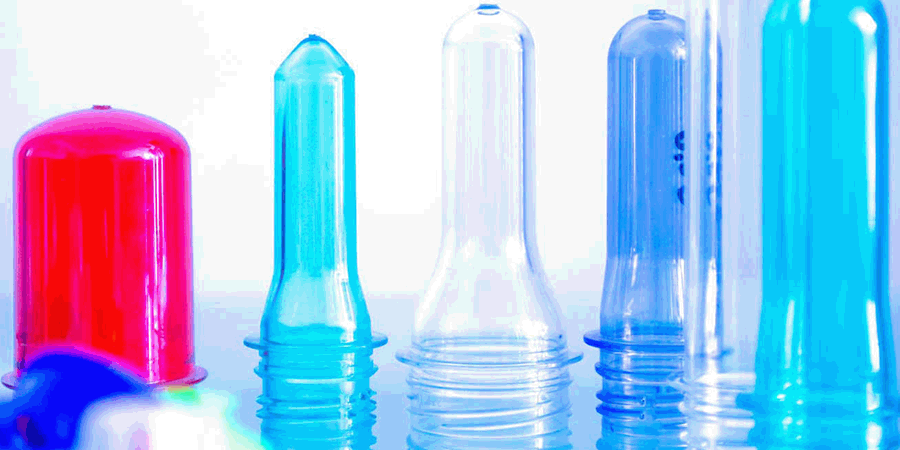
Optimizing PET blow molding machine temperature settings is the critical factor between flawless, high-performance bottles and costly production failures. Precise thermal control ensures material integrity, clarity, strength, and efficient production. This comprehensive guide dives into the key temperature zones, their impact, and best practices for setting up your PET blow molding machine for success.
Why Temperature Control is Paramount in PET Blow Molding
Polyethylene Terephthalate (PET) is a semi-crystalline polymer. Its behavior during stretch blow molding is extremely sensitive to temperature:
Molecular Orientation: Correct temperature allows optimal stretching, aligning PET molecules for superior tensile strength, gas barrier properties (especially for carbonated drinks), and impact resistance.
Crystallinity Control: Temperature dictates the rate and degree of crystallization. Too high leads to brittleness and haze; too low prevents proper formation, weakening the bottle.
Preform Sagging: Excessive preform heating causes sagging before blowing, ruining the process.
Surface Defects: Improper temperatures cause whitening, hazing, blisters, pinholes, or poor surface finish.
Process Efficiency: Optimal temperatures ensure smooth blowing, minimal scrap, and maximum output.
Key Temperature Zones in a PET Blow Molding Machine
Preform Temperature (Core):
What it is: The internal temperature of the PET preform itself, measured just before transfer to the blow mold. This is the most crucial parameter, not just oven settings.
Goal: Achieve a uniform temperature profile through the preform wall thickness. The ideal range is typically 95°C - 115°C (203°F - 239°F). The outer surface needs to be slightly hotter than the inner core to facilitate even stretching.
How to Set (Indirectly): Controlled by the preheating oven settings and exposure time. Use infrared pyrometers to measure actual preform temperature, not just oven thermocouples.
Impact: Directly governs stretchability, final bottle clarity, and mechanical properties.
Preheating Oven Zones:
What it is: Banks of infrared (IR) heaters surrounding the preforms as they rotate on the wheel before blowing. Divided into multiple independent heating zones (often 5-10+).
Goal: Gradually and uniformly heat the preform body to the target core temperature profile. Different bottle areas (body, base, neck, transition zones) often require different heat levels.
How to Set: Adjust IR lamp power (%) and/or lamp height/distance for each zone. Higher settings or closer proximity = more heat. Settings vary significantly based on preform weight, wall thickness distribution, color, and ambient conditions. Start with manufacturer recommendations and fine-tune.
Typical Range: Lamp power settings usually range from 30% - 80%, depending on the machine and lamp type. Actual emitted surface temperature can reach 300°C - 600°C (572°F - 1112°F).
Optimization: Use zone profiling to apply more heat to thicker areas (base, threads) and less to thinner areas (body sidewalls) for uniform heating. Monitor preform surface temperature visually (should be glossy, not dull or scorched) and with pyrometers.
Blow Mold Temperature:
What it is: The temperature of the metal blow molds (usually aluminum).
Goal: Control the cooling rate of the blown bottle. Cool enough to solidify the PET quickly for cycle time, but warm enough to prevent premature quenching that causes stress, whitening, or base crystallization issues. Typical range: 5°C - 15°C (41°F - 59°F) for standard bottles. Hot-fill bottles often require hotter molds (25°C - 45°C / 77°F - 113°F) to promote controlled crystallization for heat resistance.
How to Set: Regulated via the mold cooling water circuit using thermolators (temperature control units). Set the desired water temperature on the TCU. Ensure good water flow and clean channels.
Impact: Affects cycle time, bottle clarity (prevents stress whitening), dimensional stability, and base push-up.
Stretch Rod Temperature (Optional but Important):
What it is: The temperature of the internal stretch rod.
Goal: Prevent PET from sticking to the cold rod during stretching, which can cause drag marks or breaks. Usually kept warm.
How to Set: Controlled by internal heating/cooling circuits. Typical setting: 50°C - 80°C (122°F - 176°F). Often regulated automatically.
Step-by-Step Guide to Setting Temperatures
Know Your Preform: Obtain specifications (weight, resin type - virgin vs. rPET, grade, IV value, color, wall thickness profile) from your supplier.
Know Your Bottle: Understand the design, volume, required performance (carbonation, hot-fill, chemical resistance), and critical areas.
Consult Machine Manual: Start with the machine manufacturer's baseline recommendations for similar preforms